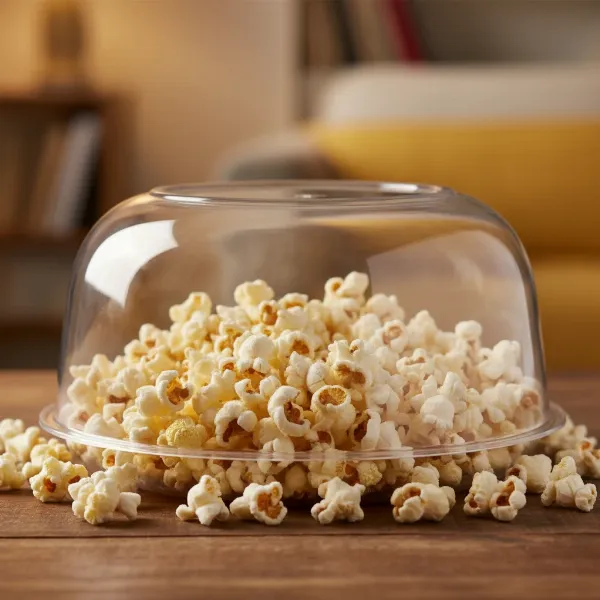
There’s nothing quite like the aroma and taste of freshly popped popcorn, whether it’s for a cozy movie night at home or a lively gathering. As an Admin for popcornmakerpro.com with over a decade of experience, I’ve seen countless machines come and go. When it comes to choosing the perfect popcorn maker, one of the most common questions I encounter is about durability and longevity. Do classic stovetop models outlast their modern electric counterparts, or has technology closed the gap? Let’s dive deep into the lifespan of both types to help you make an informed decision and find the most enduring popcorn maker for your kitchen.
Understanding Stovetop Popcorn Makers
Stovetop popcorn makers, often heralded for their traditional charm and superior flavor, are generally simple in design. These machines typically consist of a pot, a lid, and a hand-cranked stirring mechanism. Their durability largely stems from this inherent simplicity and the materials used in their construction.
Many high-quality stovetop models, especially those made from robust stainless steel or heavy-gauge aluminum, are built to last for many years, even decades, with proper care. The absence of complex electrical components means fewer parts are prone to failure. Without motors, heating elements, or circuit boards to burn out, the primary points of wear are mechanical, like the gears of the stirring mechanism or the integrity of the pot itself. Users frequently report their stovetop poppers, such as the popular Whirley Pop, providing consistent performance for over a decade, often becoming cherished kitchen staples passed down through families. Their longevity is a testament to their straightforward, durable construction.
Maintaining a stovetop popcorn maker for maximum longevity primarily involves thorough cleaning. While some newer models boast dishwasher-safe components, older or less expensive units often require hand washing. Grease and oil residue, if left to accumulate in the stirring gears or on the pot’s surface, can lead to stickiness and reduced efficiency over time. Regular cleaning prevents build-up, ensuring smooth operation and preserving the material integrity. Additionally, avoiding abrasive scrubbers helps maintain the non-stick properties or finish of the pot.
“A well-maintained stovetop popcorn maker, particularly those crafted from durable stainless steel, can easily become a multi-generational kitchen tool. Their resilience lies in their mechanical simplicity.”
Pros & Cons Related to Stovetop Popcorn Maker Durability
- Pros:
- Fewer Failure Points: No complex electrical components to break down.
- Robust Materials: Often made with heavy-duty metals designed for high heat.
- Repairable: Mechanical parts can often be replaced or repaired more easily than electronic ones.
- Long-Term Investment: Proven track record of lasting for many years.
- Cons:
- Grease Buildup: Can be challenging to clean intricate stirring mechanisms, potentially impacting longevity if neglected.
- Wear on Moving Parts: The hand crank and stirring rod can wear out over extended, heavy use, though often replaceable.
|
Our Picks for the Best Popcorn maker in 2026
As an Amazon Associate I earn from qualifying purchases.
|
||
| Num | Product | Action |
|---|---|---|
| 1 | Black Vintage Commercial Popcorn Machine with Cart & Warmer Light - 12oz Stainless Steel Popper Makes 60 Cups for Theater, Parties & Home Use |

|
| 2 | VEVOR Commercial Popcorn Machine, 8 Oz Kettle, 850 W Countertop Popcorn Maker for 48 Cups per Batch, Theater Style Popper with 3-Switch Control Steel Frame Tempered Glass Doors 2 Scoops 2 Spoons, Red |
|
| 3 | Hot Air Popper Popcorn Maker, 1200W Popcorn Machine, 4.5-Quart Air Popper for Family Movie Nights, Popcorn Popper, Fast 2-Min Popcorn Maker Machine, Popcorn Popper |
|
| 4 | Dash Fresh Pop Popcorn Maker - Oil-Free, Air Popcorn Popper - With Measuring Cup & Recipe Guide - Perfect for Movie Nights - 16 Cups, White |
|
| 5 | Dash SmartStore Deluxe Stirring Popcorn Maker - Hot Oil Electric Popcorn Popper with Butter-Warming Tray, Clear Serving Bowl, Storage Lid & Measuring Cup - 24 Cups, Red |
|
| 6 | West Bend Stir Crazy Hot Oil Popcorn Popper, Popcorn Maker Machine with Large Serving Bowl Lid and Stirring Rod Perfect for Movie Night Snack Time or Parties, 6-Quart, Red |
|
| 7 | Presto 04863 Poplite Hot Air Popcorn Popper - Built-In Measuring Cup + Melts Butter, Easy to Clean, Built-In Cord Wrap, 18 Cups, Red |
|
| 8 | Dash Fresh Pop Popcorn Maker - Oil-Free, Air Popcorn Popper - With Measuring Cup & Recipe Guide - Perfect for Movie Nights - 16 Cups, Aqua |
|
| 9 | Dash Fresh Pop Popcorn Maker - Oil-Free, Air Popcorn Popper - With Measuring Cup & Recipe Guide - Perfect for Movie Nights - 16 Cups, Red |
|
| 10 | Original Whirley Pop Popcorn Maker - Wabash Valley Farms Gourmet Popcorn Popper, Aluminum Pot With Nylon Gears, 3-Minute Stove Top Popper, Home Movie Night (Silver) |
|
Exploring Electric Popcorn Makers
Electric popcorn makers offer convenience and speed, coming in various forms: hot air poppers, electric oil poppers (often with stirring arms), and larger, more theatrical-style machines. Their longevity, however, is inherently tied to the quality of their electrical and mechanical components.
- Hot Air Poppers: These machines use a powerful fan to circulate hot air, popping kernels without oil. They are generally simple, with fewer moving parts than electric oil poppers. While some robust air poppers have been known to last for “a couple decades,” lighter-duty or “novelty” models often have a shorter lifespan. The primary points of failure include the heating element and the fan motor. Overheating due to continuous use without adequate cooling time can significantly shorten their life.
- Electric Oil Poppers (Stirring Poppers): These models feature a heated base and an electric stirring arm to move kernels and oil. They aim to replicate the stovetop experience with less manual effort. Here, the motor driving the stirring arm, the heating element, and the non-stick coating on the base are the most critical components for durability. If the motor fails or the non-stick coating degrades, the machine’s functionality is compromised.
- Commercial-Style Machines: These larger, often countertop or freestanding units, mimic movie theater poppers. They are typically built with more heavy-duty components and are designed for higher volume. A commercial-grade machine, with proper maintenance, can last anywhere from 5 to 15 years, with some exceptionally well-made units lasting “over two decades.” Their durability is often a direct reflection of their higher price point and robust construction.
Maintenance is crucial for the lifespan of electric popcorn makers. For air poppers, simply wiping down the interior after each use is often sufficient, as no oil is involved. Electric oil poppers, however, require more diligent cleaning to prevent oil and kernel residue from carbonizing on the heating plate and stirring arm. Since the electrical base cannot be submerged in water, cleaning must be careful and thorough, using damp cloths. Neglecting to clean frequently can lead to burnt residue, affecting performance and potentially straining the heating element. It’s also vital to allow electric machines to cool completely between batches, especially for lighter-duty models, to prevent motor or heating element burnout.
Pros & Cons Related to Electric Popcorn Maker Durability
- Pros:
- Convenience: Generally hands-off operation.
- Variety: Wide range of types and features.
- Commercial Options: Heavy-duty models are available for long-term, high-volume use.
- Cons:
- More Failure Points: Motors, heating elements, and electronic controls can fail.
- Overheating Risk: Continuous use without cooling can reduce lifespan, particularly for consumer-grade models.
- Cleaning Challenges: Non-submersible electrical bases can be harder to clean thoroughly, leading to residue buildup.
- Component Obsolescence: Finding replacement parts for older electric models can be difficult.
Comparison Table: Durability & Lifespan
| Feature | Stovetop Popcorn Maker | Electric Popcorn Maker |
|---|---|---|
| Average Lifespan | 10-20+ years (high-quality models) | 2-3 years (light-duty consumer) to 5-15+ years (commercial) |
| Key Durability Factors | Material quality (stainless steel), mechanical design | Quality of motor, heating element, electronic controls |
| Common Failure Points | Hand crank gears, pot wear (less common) | Motor burnout, heating element failure, non-stick degradation |
| Impact of Maintenance | Crucial for preventing grease buildup and ensuring smooth operation | Critical for preventing component burnout and residue accumulation |
| Ease of Repair | Often simpler, mechanical parts can be replaced | Can be complex, often requires professional repair or replacement |
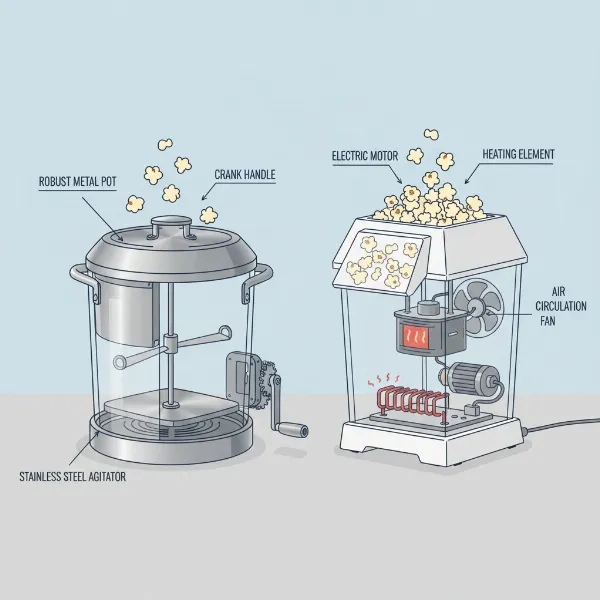 An illustrated comparison showing the internal components and construction differences between a simple, durable stovetop popcorn maker and a more complex electric model, highlighting their respective strengths and weaknesses in longevity.
Factors Influencing Popcorn Maker Longevity
Beyond the fundamental design differences, several universal factors dictate how long any popcorn maker will serve you reliably. Understanding these can help you extend your machine’s life, regardless of its type.
Build Quality & Materials
The foundation of durability lies in the materials and construction. Stovetop poppers made from thick-gauge stainless steel will naturally outlast flimsy aluminum pots. For electric models, heavy-duty motors, robust heating elements, and quality wiring contribute significantly to longevity. Cheaper plastics and thin metals in budget-friendly electric poppers are often the first to show wear and tear, leading to shorter lifespans. Investing in a well-built model from a reputable brand typically pays dividends in durability.
Usage Frequency
How often you use your popcorn maker has a direct impact on its lifespan. A machine used once a week will inherently last longer than one churning out multiple batches daily. Heavy use, especially for consumer-grade electric models, can quickly wear out motors and heating elements. Commercial-grade machines are specifically designed for high-volume use, but even they require diligent maintenance to sustain peak performance under constant demand.
Maintenance & Cleaning Habits
This is arguably the most critical factor. Regular and thorough cleaning prevents the buildup of carbonized oil and kernel residue, which can degrade non-stick surfaces, clog mechanisms, and strain heating elements. Allowing electric machines to cool between uses prevents overheating of internal components. Following the manufacturer’s cleaning guidelines and recommended cool-down periods can add years to a popcorn maker’s life. Neglect, conversely, is a fast track to premature failure.
Type of Popcorn Maker (Simplicity vs. Complexity)
As discussed, stovetop models generally boast fewer moving and electrical parts, making them inherently less susceptible to complex failures. Electric models, while convenient, introduce more potential points of failure with their motors, fans, heating elements, and sometimes intricate control boards. The more intricate the design, the more potential there is for something to malfunction over time.
Brand Reputation and Warranty
Reputable brands often use higher-quality components and offer better customer support and warranty coverage. A strong warranty can provide peace of mind and protect your investment against early defects, though it doesn’t guarantee indefinite longevity. Researching user reviews about long-term reliability for specific brands and models is always a wise step before purchasing.
Tips to Maximize Your Popcorn Maker’s Lifespan
To ensure your popcorn maker remains a faithful companion for many years, embrace these simple yet effective practices:
- Read the Manual: Always adhere to the manufacturer’s specific instructions for operation, cleaning, and maintenance. These guidelines are tailored to your machine’s design and are essential for optimal performance and longevity.
- Regular, Thorough Cleaning: After every use, clean your popcorn maker. For stovetop models, pay attention to the stirring mechanism. For electric poppers, wipe down internal surfaces and ensure no residue builds up around heating elements, being careful not to submerge electrical bases.
- Allow Cooling Time: Especially for electric air and oil poppers, give the machine a break between batches. Continuous operation without allowing internal components to cool down can lead to overheating and premature failure of motors and heating elements.
- Use Quality Ingredients: Using the right type of oil (high smoke point) for oil poppers and quality popcorn kernels can reduce residue buildup and ensure efficient popping, putting less strain on the machine.
- Proper Storage: Store your popcorn maker in a clean, dry place, protecting it from dust and physical damage. Ensure it’s completely dry before storing to prevent corrosion, especially for metal components.
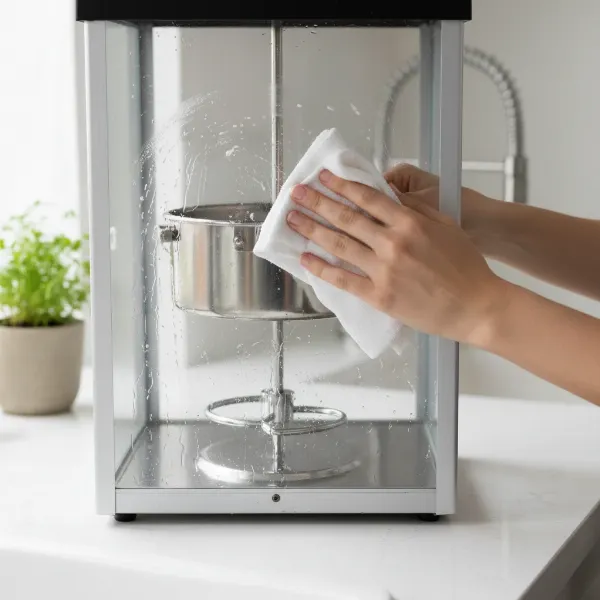 A person diligently cleaning their popcorn maker, emphasizing the importance of regular maintenance for extended lifespan. Focus on hands-on care.
Conclusion
When pitting stovetop against electric popcorn makers for longevity, stovetop models generally hold the edge. Their simpler, more robust mechanical design and fewer electrical components mean there are fewer points of failure, often allowing them to serve reliably for decades. Electric popcorn makers, while offering unparalleled convenience, introduce complex electrical systems that can be prone to wear over time, especially with frequent use or inadequate cooling. However, a high-quality, well-maintained electric unit, particularly commercial-grade models, can still offer many years of delicious popcorn.
Ultimately, the lifespan of any popcorn maker boils down to its initial build quality, how often it’s used, and, most critically, the diligence of its owner in terms of cleaning and maintenance. By choosing wisely and caring for your machine, you can enjoy movie-quality popcorn for years to come. Which type will you choose to be your long-term popcorn companion?
Frequently Asked Questions
How can I make my electric popcorn maker last longer?
To extend the life of your electric popcorn maker, always allow it to cool completely between batches, clean it thoroughly after each use (especially oil poppers), and avoid overloading it. Using quality kernels and following the manufacturer’s maintenance schedule are also key.
Are expensive popcorn makers more durable?
Generally, yes. Higher-priced popcorn makers, whether stovetop or electric, often use superior materials and more robust components designed for greater durability and longevity. Investing in a quality product from a reputable brand usually correlates with a longer lifespan.
What are the most common reasons popcorn makers break down?
For stovetop models, wear on the stirring mechanism or degradation of the pot’s interior are common issues. Electric popcorn makers frequently fail due to burnout of the heating element or motor, often exacerbated by overheating, lack of cleaning, or continuous heavy use.