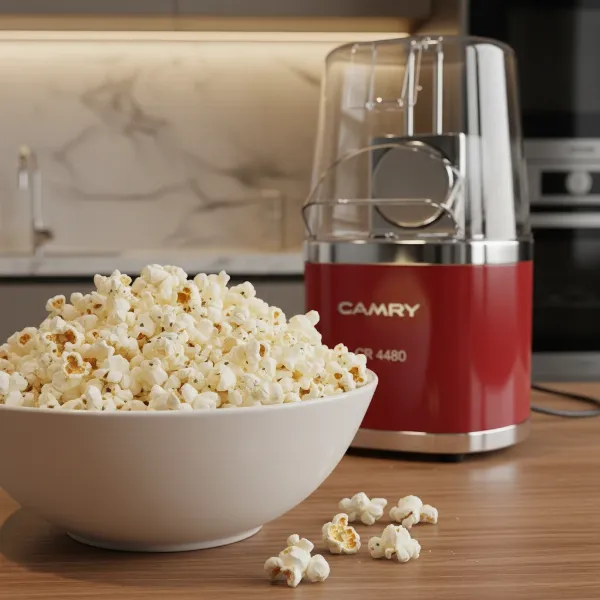
There’s an undeniable magic to kettle corn—that perfect balance of sweet and salty, each kernel coated in a delicate, crispy glaze. While often associated with bustling fairs or traditional stovetop methods, the truth is you can effortlessly recreate this beloved snack right in your own kitchen using an electric popcorn maker. If you’ve been yearning for that classic sweet and savory crunch but thought it was out of reach, prepare to discover how simple and rewarding it is to make your own delicious batches at home.
Understanding Your Electric Popcorn Maker
Electric popcorn makers come in a few popular styles, and understanding yours is the first step to mastering homemade kettle corn. The key difference lies in how they handle heat and stirring, both critical for sugar caramelization.
Electric kettle-style popcorn makers, often resembling miniature cinema machines, feature a built-in stirring arm within a heated kettle. These are ideal for kettle corn as the constant agitation prevents sugar from burning and ensures even coating. Similarly, electric poppers with a stirring plate, like the “Stir Crazy” type, also provide the necessary continuous motion to mix ingredients and coat kernels evenly. Air poppers, however, operate by circulating hot air without oil or a stirring mechanism, making them unsuitable for traditional kettle corn which relies on oil and melted sugar to create its distinctive texture. For the best results, an electric popcorn maker with a heated surface and a stirring arm is your go-to.
Essential Ingredients for Perfect Kettle Corn
The beauty of kettle corn lies in its simplicity, requiring just a few staple ingredients. Quality ingredients, however, make all the difference in achieving that irresistible flavor and texture.
First, choose fresh, high-quality popcorn kernels. While any variety will pop, some enthusiasts prefer “mushroom” kernels for their rounder shape, which can hold more sweet coating, though “butterfly” kernels work perfectly well. Next, select an oil with a high smoke point. Coconut oil is a classic choice, lending a subtle richness that complements the sweetness, but canola or vegetable oil are excellent neutral alternatives. Granulated sugar is standard for kettle corn, providing that crisp, sweet crunch. For a deeper, slightly more complex flavor, some cooks opt for brown sugar. Finally, a good dash of salt—fine-grain sea salt is often preferred as it adheres better to the kernels and offers a clean, briny counterpoint to the sweetness. Ensure all your ingredients are measured out and ready before you begin the popping process.
Step-by-Step Guide: Making Kettle Corn in an Electric Popcorn Maker
Crafting the perfect batch of sweet and salty kettle corn in your electric popcorn maker is a straightforward process once you know the timing. The key is coordinating the addition of sugar to prevent burning and achieve that signature glaze.
Begin by gathering your measured ingredients: usually ½ cup of popcorn kernels, 2-3 tablespoons of high-smoke-point oil (like coconut or canola), 2 tablespoons of granulated sugar, and ½ teaspoon of fine sea salt. Some recipes suggest mixing the sugar and oil beforehand, but a common and effective method is to start with just the oil and kernels. Turn on your electric popcorn maker and let it heat up for a minute or two. Add the oil, followed by the popcorn kernels. Once a few kernels have popped, indicating the oil is sufficiently hot, immediately sprinkle the sugar evenly over the kernels. Close the lid quickly to contain the popping. The built-in stirring mechanism in your electric popper will now do its magic, continuously mixing the kernels and melting sugar. Listen intently: the popping will accelerate and then gradually slow. Once the pops are consistently 2-3 seconds apart, it’s crucial to turn off the machine and immediately dump the freshly popped kettle corn into a large bowl. This immediate transfer prevents the sugar from burning on the hot surface, which can happen very quickly. Finally, sprinkle with the measured sea salt and gently toss to ensure an even distribution of that delightful sweet and salty flavor.
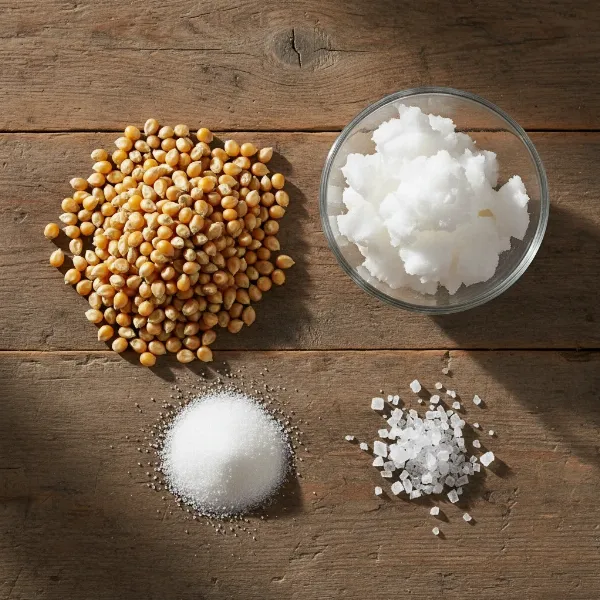 A close-up of essential kettle corn ingredients: popcorn kernels, coconut oil, granulated sugar, and sea salt, neatly arranged.
Tips for Troubleshooting and Achieving Perfection
Even with a reliable electric popcorn maker, a few common issues can arise when making kettle corn. Knowing how to troubleshoot them will elevate your homemade batches from good to truly exceptional.
The most frequent challenge is burnt sugar. This often occurs if the sugar is added too early or the kettle corn isn’t removed immediately after popping. To prevent this, ensure the oil and a few “test” kernels have popped before adding the sugar, and as soon as the popping significantly slows (around 2-3 seconds between pops), promptly turn off the machine and transfer the popcorn to a separate bowl. Uneven coating is another common concern, where some kernels are perfectly glazed while others remain plain. This can be mitigated by ensuring the stirring mechanism in your electric popper is working effectively and that the sugar is sprinkled as evenly as possible over the kernels. For a crispy texture, avoid letting the kettle corn steam in the hot popper after popping; dumping it immediately into an open bowl allows moisture to escape. If your kettle corn turns out too soft or chewy, it might be due to excess moisture. Spreading the hot kettle corn in a single layer on a baking sheet lined with parchment paper for a few minutes can help it crisp up. Finally, achieving your ideal sweet-to-salty ratio is a matter of personal preference. Don’t hesitate to adjust the sugar and salt amounts in subsequent batches to find your perfect balance.
“The magic of kettle corn truly comes alive when the sugar caramelizes just right, forming that delicate, crunchy shell. Patience with timing and quick action at the end are your best allies.” – Sarah Chen, Popcorn Connoisseur
Cleaning Your Electric Popcorn Maker After Kettle Corn
After enjoying your delicious homemade kettle corn, proper cleaning of your electric popcorn maker is essential. The caramelized sugar can become quite stubborn if left to cool and harden, making cleanup more challenging.
The most important rule for cleaning after making kettle corn is to clean immediately. While the machine is still warm (but not hot enough to burn you), gently wipe down any surfaces that came into contact with the sugar. Many electric popcorn makers feature non-stick surfaces, which greatly assist in this process. For the kettle, if removable, fill it with hot, soapy water and let it soak while you address other components. For machines with a non-removable kettle, a warm, damp cloth or sponge can be used to wipe away residue. Avoid abrasive scrubbers that could damage non-stick coatings. If some sugar has hardened, a quick re-warming of the kettle for a few seconds can sometimes soften it enough to be easily wiped away. Regular and immediate cleaning not only simplifies the task but also maintains the longevity and optimal performance of your electric popcorn maker, ensuring it’s always ready for your next batch of sweet and salty perfection.
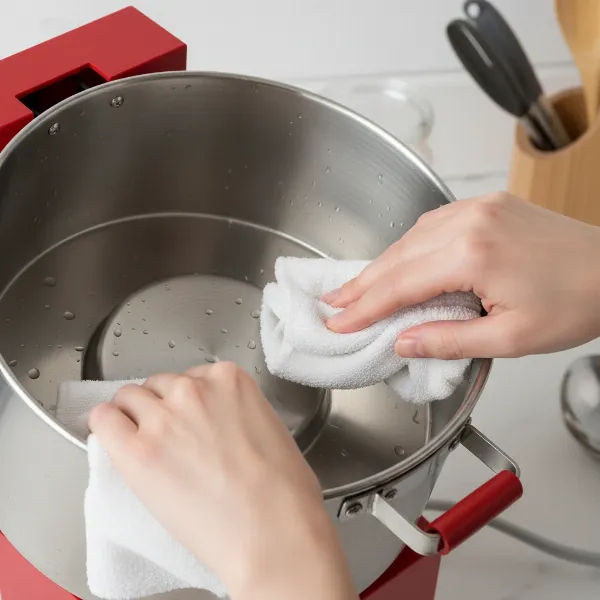 A person cleaning an electric popcorn maker with a cloth, showing a clean surface.
Conclusion
Making kettle corn in an electric popcorn maker is a delightful and surprisingly simple way to enjoy this classic treat at home. By selecting the right ingredients, following a few key steps for timing the sugar addition, and promptly removing your popcorn, you can achieve consistently perfect, sweet-and-salty batches every time. This method not only offers convenience but also allows you to control the quality of ingredients and customize the flavor to your exact preference. So, dust off your electric popper, grab your kernels, and get ready to transform your movie nights or snack times with this irresistible homemade delicacy. What’s your favorite occasion to share homemade kettle corn?
Frequently Asked Questions
Can I use an air popper to make kettle corn?
|
Our Picks for the Best Popcorn maker in 2026
As an Amazon Associate I earn from qualifying purchases.
|
||
| Num | Product | Action |
|---|---|---|
| 1 | Black Vintage Commercial Popcorn Machine with Cart & Warmer Light - 12oz Stainless Steel Popper Makes 60 Cups for Theater, Parties & Home Use |

|
| 2 | Dash Fresh Pop Popcorn Maker - Oil-Free, Air Popcorn Popper - With Measuring Cup & Recipe Guide - Perfect for Movie Nights - 16 Cups, Aqua |
|
| 3 | VEVOR Commercial Popcorn Machine, 8 Oz Kettle, 850 W Countertop Popcorn Maker for 48 Cups per Batch, Theater Style Popper with 3-Switch Control Steel Frame Tempered Glass Doors 2 Scoops 2 Spoons, Red |
|
| 4 | Dash Fresh Pop Popcorn Maker - Oil-Free, Air Popcorn Popper - With Measuring Cup & Recipe Guide - Perfect for Movie Nights - 16 Cups, White |
|
| 5 | Dash SmartStore Deluxe Stirring Popcorn Maker - Hot Oil Electric Popcorn Popper with Butter-Warming Tray, Clear Serving Bowl, Storage Lid & Measuring Cup - 24 Cups, Red |
|
| 6 | Dash Fresh Pop Popcorn Maker - Oil-Free, Air Popcorn Popper - With Measuring Cup & Recipe Guide - Perfect for Movie Nights - 16 Cups, Red |
|
| 7 | Original Whirley Pop Popcorn Maker - Wabash Valley Farms Gourmet Popcorn Popper, Aluminum Pot With Nylon Gears, 3-Minute Stove Top Popper, Home Movie Night (Silver) |
|
| 8 | Presto 04863 Poplite Hot Air Popcorn Popper - Built-In Measuring Cup + Melts Butter, Easy to Clean, Built-In Cord Wrap, 18 Cups, Red |
|
| 9 | West Bend Stir Crazy Hot Oil Popcorn Popper, Popcorn Maker Machine with Large Serving Bowl Lid and Stirring Rod Perfect for Movie Night Snack Time or Parties, 6-Quart, Red |
|
| 10 | Hot Air Popper Popcorn Maker, 1200W Popcorn Machine, 4.5-Quart Air Popper for Family Movie Nights, Popcorn Popper, Fast 2-Min Popcorn Maker Machine, Popcorn Popper |
|
While air poppers are great for oil-free popcorn, they are not ideal for kettle corn. Kettle corn requires oil and melted sugar to create its unique sweet-and-salty coating, which air poppers cannot facilitate due to their dry-heat method and lack of a stirring mechanism.
What is the best type of oil for making kettle corn?
Coconut oil is widely recommended for kettle corn due to its high smoke point and subtle flavor that complements the sugar. However, neutral oils like canola or vegetable oil are also excellent choices and perform very well without imparting any distinct taste.
How do I prevent my homemade kettle corn from getting sticky?
The best way to prevent sticky kettle corn is to immediately transfer it out of the hot popcorn maker once popping has slowed. Spread it in a single layer on a baking sheet lined with parchment paper to allow it to cool and crisp up, letting any excess moisture escape.
How long does homemade kettle corn typically last?
Homemade kettle corn is best enjoyed fresh, ideally within a day or two. Store it in an airtight container at room temperature to maintain its crispness. Over time, it may lose some of its crunch, but it will still be delicious.