The aroma of freshly popped popcorn fills the air, promising a delightful snack. Yet, often, that anticipation turns into disappointment when you bite into a batch that’s anything but perfect—chewy, burnt, or riddled with unpopped kernels. Making great popcorn, whether on the stovetop, in an air popper, or a dedicated machine, can feel like a delicate art. But fear not, the secret to consistently fluffy, crispy popcorn isn’t magic; it’s simply avoiding a few common pitfalls. This guide will walk you through the most frequent mistakes that sabotage your snack and show you how to correct them, ensuring every kernel reaches its delicious potential.
The Steam Trap: Why Your Popcorn Turns Chewy
One of the most frequent culprits behind soggy or chewy popcorn is trapped steam. As popcorn kernels heat, the tiny bit of water inside each kernel turns into steam, eventually causing the kernel to burst. This steam, however, doesn’t always escape the cooking vessel efficiently. When steam accumulates under the lid, it can re-condense onto the freshly popped kernels, causing them to reabsorb moisture and lose their crisp texture, becoming dense and chewy.
To prevent this common issue, proper ventilation is key. If you’re using a pot on the stovetop, consider a lid with small vent holes or simply crack the lid slightly to allow excess steam to escape during popping. For popcorn machines, ensure any vents are unobstructed. Immediately after popping, transfer the popcorn to an open bowl to cool and allow any residual steam to dissipate, locking in that desirable crispness.
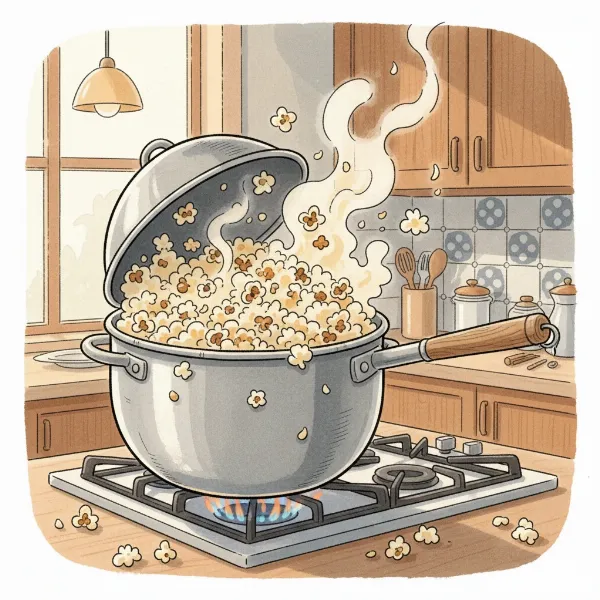 Illustration of steam escaping from a popcorn maker to prevent chewy popcorn texture
Kernel Catastrophes: Moisture Mismanagement
The journey to perfect popcorn begins with the kernels themselves. Their internal moisture content is critical, acting as the pressure-cooker for the perfect pop. Any imbalance in this delicate moisture level can lead to significant texture issues, from an abundance of “old maids” to an unpleasantly flat or chewy bite.
Too Dry Kernels: The Curse of the Unpopped
|
Our Picks for the Best Popcorn maker in 2026
As an Amazon Associate I earn from qualifying purchases.
|
||
| Num | Product | Action |
|---|---|---|
| 1 | Dash Fresh Pop Popcorn Maker - Oil-Free, Air Popcorn Popper - With Measuring Cup & Recipe Guide - Perfect for Movie Nights - 16 Cups, Red |

|
| 2 | Dash Fresh Pop Popcorn Maker - Oil-Free, Air Popcorn Popper - With Measuring Cup & Recipe Guide - Perfect for Movie Nights - 16 Cups, Aqua |
|
| 3 | Hot Air Popper Popcorn Maker, 1200W Popcorn Machine, 4.5-Quart Air Popper for Family Movie Nights, Popcorn Popper, Fast 2-Min Popcorn Maker Machine, Popcorn Popper |
|
| 4 | Black Vintage Commercial Popcorn Machine with Cart & Warmer Light - 12oz Stainless Steel Popper Makes 60 Cups for Theater, Parties & Home Use |
|
| 5 | Original Whirley Pop Popcorn Maker - Wabash Valley Farms Gourmet Popcorn Popper, Aluminum Pot With Nylon Gears, 3-Minute Stove Top Popper, Home Movie Night (Silver) |
|
| 6 | VEVOR Commercial Popcorn Machine, 8 Oz Kettle, 850 W Countertop Popcorn Maker for 48 Cups per Batch, Theater Style Popper with 3-Switch Control Steel Frame Tempered Glass Doors 2 Scoops 2 Spoons, Red |
|
| 7 | West Bend Stir Crazy Hot Oil Popcorn Popper, Popcorn Maker Machine with Large Serving Bowl Lid and Stirring Rod Perfect for Movie Night Snack Time or Parties, 6-Quart, Red |
|
| 8 | Dash Fresh Pop Popcorn Maker - Oil-Free, Air Popcorn Popper - With Measuring Cup & Recipe Guide - Perfect for Movie Nights - 16 Cups, White |
|
| 9 | Presto 04863 Poplite Hot Air Popcorn Popper - Built-In Measuring Cup + Melts Butter, Easy to Clean, Built-In Cord Wrap, 18 Cups, Red |
|
| 10 | Dash SmartStore Deluxe Stirring Popcorn Maker - Hot Oil Electric Popcorn Popper with Butter-Warming Tray, Clear Serving Bowl, Storage Lid & Measuring Cup - 24 Cups, Red |
|
If your bowl is consistently filled with a frustrating number of unpopped kernels, often referred to as “old maids,” the most likely culprit is kernels that are too dry. Over time, or when stored improperly, popcorn kernels lose their essential internal moisture. Without enough water inside, there isn’t sufficient steam pressure to cause the kernel to explode, leaving them unpopped even under adequate heat.
The solution is straightforward: always use fresh popcorn kernels. Store them in an airtight container at room temperature, away from humidity or extreme cold, which can dry them out prematurely. Avoid refrigerating kernels, as the cold and dry environment can deplete their moisture content. If you suspect your kernels are old, consider buying a fresh batch—it often makes a world of difference.
Too Moist Kernels: Flat and Flavorless
While less common for commercially packaged popcorn, kernels that are too moist can also lead to poor texture, resulting in popcorn that is flat, dense, or chewy even after popping. This scenario often occurs with home-grown corn or kernels that have been exposed to high humidity for extended periods. The excess moisture can interfere with the rapid expansion needed for that characteristic fluffy texture.
Ensuring your kernels are stored in a dry, airtight environment will prevent them from absorbing unwanted moisture. If you notice kernels feeling slightly damp or producing weak, muffled pops, it’s a sign they might be too moist. Opt for reputable brands known for consistent kernel quality.
Heat Hazards: Burnt Kernels and Poor Popping
Achieving the right popping temperature is paramount. It’s a fine line between not enough heat, which leaves you with a bowl of half-popped duds, and too much heat, which can quickly turn your snack into a charred mess.
The Scorched Disaster: Too Much Heat
One of the fastest ways to ruin popcorn is by subjecting it to excessively high heat. When the oil or popping surface gets too hot, the kernels can scorch and burn before they even have a chance to pop. Even if they do pop, the resulting popcorn often has a burnt taste and an undesirable, brittle texture. Furthermore, already popped kernels left in a very hot environment will quickly burn.
The key is to use medium-high heat for stovetop popping and to preheat your oil or popcorn maker properly but not excessively. Pay attention to the popping sounds; as the popping slows down to one pop every few seconds, remove the popcorn from the heat immediately.
The Unpopped Mystery: Not Enough Heat
Conversely, if the heat isn’t high enough, kernels won’t reach the critical temperature required for the internal water to turn into steam and explode. This results in many unpopped kernels or popcorn that pops weakly and is small and dense. Uneven heat distribution can also contribute to this problem, where some kernels receive adequate heat while others remain cool.
Ensure your pot or popcorn maker is adequately preheated before adding kernels. For stovetop methods, the “test kernel” trick—popping three kernels before adding the rest—helps gauge the ideal temperature. Use enough oil to ensure even heat transfer to all kernels, and give the pot an occasional shake to distribute heat evenly.
Oil & Additives: More Than Just Flavor
The type and amount of oil you use, as well as when you add your seasonings, play a surprisingly significant role in your popcorn’s final texture. Getting these elements wrong can lead to anything from an oily, chewy batch to tough, inconsistently seasoned kernels.
The Oil Dilemma: Too Much, Too Little, or the Wrong Kind
Oil serves multiple purposes in popcorn making: it conducts heat, helps transfer flavor, and can even contribute to a crisp texture. However, using too much oil can result in greasy, heavy, and even chewy popcorn by coating the popped kernels and inhibiting steam release. Conversely, not enough oil can lead to uneven popping, burnt kernels, and a dry, brittle texture. The type of oil also matters; oils with a low smoke point will burn and impart an unpleasant flavor to your popcorn.
Aim for a ratio of about one tablespoon of oil for every quarter cup of kernels. Choose oils with a high smoke point, such as coconut oil, canola oil, or avocado oil, which can withstand the heat required for popping without burning.
The Salting Secret: When to Season for Crispness
It might seem counterintuitive, but adding salt or other dry seasonings too early—especially directly into the oil before popping—can negatively impact your popcorn’s texture. Salt can draw moisture out, potentially making kernels tougher, and it often doesn’t distribute evenly.
For the best texture and flavor, always salt and season your popcorn after it has fully popped and been removed from the heat. This allows the seasonings to adhere better to the warm, freshly popped surfaces and prevents any adverse effects on the popping process or final crispness.
“Many home cooks underestimate the impact of humidity on popcorn. Both during popping and after, moisture is the enemy of crispness. Ventilation and immediate serving are your best friends.” – Chef Elena Rodriguez, Culinary Instructor
Post-Popping Pitfalls: Storage and Serving
Even if you’ve mastered the popping process, your efforts can be undone by how you handle your popcorn immediately after or how you store leftovers. The environment can quickly reclaim that perfect texture.
The Case of the Sitting Popcorn
Freshly popped popcorn is a delight, but it has a limited shelf life for optimal texture. Leaving popcorn sitting out in the open for extended periods, especially in a humid environment, allows it to absorb moisture from the air. This rapid re-hydration quickly diminishes its crispness, turning it stale, soft, and chewy.
To enjoy popcorn at its peak, serve it immediately after popping. If you have leftovers, store them in an airtight container at room temperature. While it won’t be quite as crisp as when fresh, this method will preserve its texture better than leaving it exposed.
Problem-Solution Guide for Popcorn Perfection
| Problem | Common Causes | Solutions |
|---|---|---|
| Chewy/Soggy Popcorn | Trapped steam, too moist kernels, too much oil | Ensure ventilation, use fresh kernels, optimize oil amount, serve immediately |
| Burnt Popcorn | Too much heat, wrong oil, left in heat too long | Use medium-high heat, high smoke point oil, remove promptly |
| Many Unpopped Kernels | Too dry kernels, not enough heat, low quality kernels | Use fresh, high-quality kernels; preheat adequately, ensure even heat |
| Tough/Hard Popcorn | Salting too early, old kernels, improper storage | Salt after popping, use fresh kernels, store airtight at room temp |
| Oily/Greasy Popcorn | Too much oil | Measure oil precisely (1 tbsp per 1/4 cup kernels) |
Conclusion
Creating perfectly textured popcorn—light, fluffy, and crisp—is an achievable goal for any popcorn enthusiast. By understanding and avoiding these common mistakes, you transform a potentially disappointing snack into a consistently delightful experience. From ensuring proper ventilation to managing kernel moisture and mastering heat control, each small adjustment contributes to a superior batch. So, grab your kernels, choose your method, and embark on a journey to popcorn perfection. What will be the first mistake you eliminate from your popcorn-making routine?
Frequently Asked Questions
Why is my air-popped popcorn often tough or dry?
Air-popped popcorn, by its nature, uses no oil, which can lead to a drier texture compared to oil-popped versions. Without oil to create a crisp exterior and aid in heat transfer, air-popped kernels can sometimes feel tougher. Ensure you’re using fresh kernels and removing them from the heat immediately after popping to prevent further drying.
Can I rehydrate old popcorn kernels to make them pop better?
While some methods suggest soaking old kernels in water to rehydrate them, this is generally not recommended for home users. It can lead to inconsistent results, kernels that don’t pop properly, or even mold. It’s usually best to start with fresh, properly stored kernels for reliable popping.
What is the ideal popping temperature for stovetop popcorn?
The ideal temperature for stovetop popcorn is typically around 375°F (190°C). This ensures the oil is hot enough to cause the kernels to pop quickly and efficiently without scorching them. A good test is to add 2-3 kernels to the preheated oil; when they pop, the oil is ready for the rest of the batch.