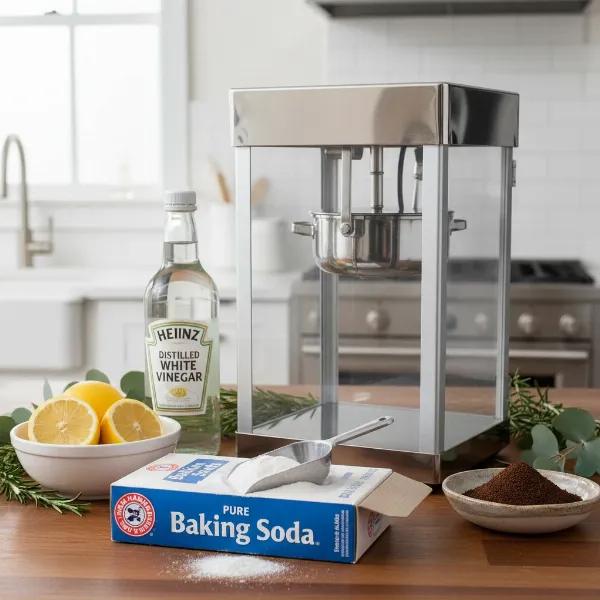
There’s little more disappointing than settling down for a movie night, eager for a bowl of fluffy popcorn, only to find a stubborn collection of unpopped kernels at the bottom of your bowl. These “old maids” can be a frustrating mystery, leaving you wondering what went wrong with your popcorn maker. But don’t worry, you’re not alone, and the good news is that understanding the science behind a perfect pop can help you troubleshoot and achieve a much higher yield of delicious, airy popcorn every time.
The Science Behind the Perfect Pop
Before diving into troubleshooting, it’s helpful to understand what makes a popcorn kernel burst into its fluffy, edible form. Each kernel is a tiny, self-contained pressure cooker, composed of a hard outer shell (hull), a starchy interior (endosperm), and a small amount of moisture. When heated, this moisture turns into steam. As the temperature rises, the steam pressure inside the kernel builds dramatically. Once it reaches a critical point, around 348 degrees Fahrenheit (175°C) and considerable pressure, the hull can no longer contain it and ruptures. The superheated starch rapidly expands and cools, turning inside out to create that characteristic crunchy puff we all love. For this magical transformation to occur, the kernel needs just the right amount of moisture and sufficient, consistent heat.
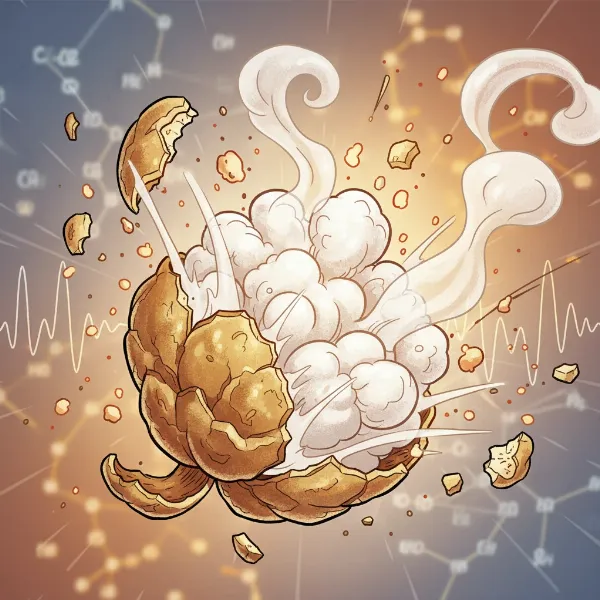 Close-up of a popcorn kernel bursting, illustrating the scientific process of popping.
Common Reasons Your Popcorn Kernels Aren’t Popping
Several factors can derail this delicate process, leading to a higher number of unpopped kernels. Let’s explore the primary culprits that often cause your popcorn maker to underperform.
Lack of Optimal Moisture Content
The most frequent reason for unpopped kernels is insufficient moisture. Popcorn kernels ideally need a moisture content between 14-15% to pop effectively.
- Too Dry: Over time, especially with improper storage, kernels can dry out, losing the essential internal water. Without enough moisture to convert into steam and build pressure, the kernel won’t explode. This is common with older popcorn.
- Too Wet: While less common, kernels with excessively high moisture content can also fail to pop properly. The hull might become too soft, allowing steam to escape before enough pressure builds, or the starch might become mushy.
|
Our Picks for the Best Popcorn maker in 2026
As an Amazon Associate I earn from qualifying purchases.
|
||
| Num | Product | Action |
|---|---|---|
| 1 | Dash Fresh Pop Popcorn Maker - Oil-Free, Air Popcorn Popper - With Measuring Cup & Recipe Guide - Perfect for Movie Nights - 16 Cups, White |

|
| 2 | Black Vintage Commercial Popcorn Machine with Cart & Warmer Light - 12oz Stainless Steel Popper Makes 60 Cups for Theater, Parties & Home Use |
|
| 3 | Original Whirley Pop Popcorn Maker - Wabash Valley Farms Gourmet Popcorn Popper, Aluminum Pot With Nylon Gears, 3-Minute Stove Top Popper, Home Movie Night (Silver) |
|
| 4 | Dash Fresh Pop Popcorn Maker - Oil-Free, Air Popcorn Popper - With Measuring Cup & Recipe Guide - Perfect for Movie Nights - 16 Cups, Aqua |
|
| 5 | Hot Air Popper Popcorn Maker, 1200W Popcorn Machine, 4.5-Quart Air Popper for Family Movie Nights, Popcorn Popper, Fast 2-Min Popcorn Maker Machine, Popcorn Popper |
|
| 6 | West Bend Stir Crazy Hot Oil Popcorn Popper, Popcorn Maker Machine with Large Serving Bowl Lid and Stirring Rod Perfect for Movie Night Snack Time or Parties, 6-Quart, Red |
|
| 7 | VEVOR Commercial Popcorn Machine, 8 Oz Kettle, 850 W Countertop Popcorn Maker for 48 Cups per Batch, Theater Style Popper with 3-Switch Control Steel Frame Tempered Glass Doors 2 Scoops 2 Spoons, Red |
|
| 8 | Presto 04863 Poplite Hot Air Popcorn Popper - Built-In Measuring Cup + Melts Butter, Easy to Clean, Built-In Cord Wrap, 18 Cups, Red |
|
| 9 | Dash Fresh Pop Popcorn Maker - Oil-Free, Air Popcorn Popper - With Measuring Cup & Recipe Guide - Perfect for Movie Nights - 16 Cups, Red |
|
| 10 | Dash SmartStore Deluxe Stirring Popcorn Maker - Hot Oil Electric Popcorn Popper with Butter-Warming Tray, Clear Serving Bowl, Storage Lid & Measuring Cup - 24 Cups, Red |
|
Incorrect Popping Temperature
Temperature control is crucial. Both too little and too much heat can lead to disappointing results.
- Insufficient Heat: If your popcorn maker or cooking oil doesn’t reach the optimal popping temperature range (typically 350-460°F or 175-238°C), the water inside the kernels won’t heat quickly enough to generate the explosive steam pressure needed. This can result in kernels that partially pop or don’t pop at all.
- Excessive Heat: Conversely, if the temperature is too high, the kernels can burn on the outside before the internal moisture has a chance to turn to steam, or the moisture might escape too slowly, leading to scorched, unpopped kernels. Uneven heating in your popcorn maker can also contribute to this problem, with some kernels burning while others remain raw.
Kernel Quality and Age
The quality and freshness of your popcorn kernels play a significant role.
- Old Kernels: As kernels age, their internal moisture content naturally decreases, making them less likely to pop. The integrity of the hull can also degrade, making it unable to withstand the necessary pressure.
- Poor Quality Kernels: Not all popcorn kernels are created equal. Some varieties or brands may have naturally weaker hulls or less consistent moisture levels, leading to a higher percentage of duds. Damaged kernels with cracked hulls also won’t pop as the steam can escape.
Overcrowding the Popcorn Maker
It might be tempting to maximize your batch, but overloading your popcorn maker can hinder proper popping.
- Uneven Heat Distribution: Too many kernels in the popping chamber prevent hot air (in air poppers) or hot oil (in stovetop/oil poppers) from circulating evenly. This creates hot and cold spots, meaning some kernels get enough heat while others remain underheated.
- Reduced Efficiency: Overcrowding can also lower the overall temperature of the popping environment, making it harder for all kernels to reach their popping point simultaneously.
Improper Storage Conditions
How you store your unpopped popcorn kernels can greatly impact their viability.
- Exposure to Air and Humidity: Storing kernels in unsealed containers allows moisture to escape or, in very humid environments, absorb too much moisture. Both extremes can reduce popping success.
- Temperature Fluctuations: Frequent changes in temperature can also affect the kernels’ moisture stability over time.
Troubleshooting Unpopped Kernels: A Step-by-Step Guide
Don’t give up on your kernels just yet! With a few simple adjustments and checks, you can significantly improve your popcorn’s popping performance.
Assess Kernel Freshness and Moisture
The first step in troubleshooting is to examine your kernels.
- The Fingernail Test: A quick way to estimate moisture is the fingernail test. Try to dent a kernel with your fingernail. If it’s very hard and resists a dent, it might be too dry. If it dents easily, it might have too much moisture (though this is less common with store-bought kernels). An ideal kernel will be hard but might show a slight mark with significant pressure.
- Rehydration Method: For dry kernels, you can try to reintroduce moisture. Place your kernels in a jar with 1-2 teaspoons of water, seal it, and shake well. Let them sit for 24 hours, or up to 3-4 days, shaking daily to distribute the moisture. This can revive old kernels, significantly increasing their pop rate.
Optimize Your Popping Method
Adjusting your popping technique is crucial for maximizing your yield, regardless of your popcorn maker type.
- Preheating is Key: Always preheat your popcorn maker or oil to the correct temperature before adding all the kernels. For stovetop poppers, add a few test kernels to the oil. Once they pop, you know the oil is ready for the rest of your batch.
- Use the Right Amount of Oil (for oil poppers): Follow your recipe or popcorn maker’s instructions for the correct oil-to-kernel ratio. Too little oil can lead to scorching, while too much can make popcorn greasy and less efficient at heat transfer.
- Don’t Overload: Stick to the recommended maximum capacity for your popcorn maker. Allowing space for kernels to move and heat evenly is essential for a good pop.
- Shake for Even Heating: For stovetop methods, consistent shaking of the pot ensures that all kernels come into contact with the hot surface and oil, preventing burning and promoting even popping.
Evaluate Your Popcorn Maker
Sometimes the issue isn’t the kernels but the equipment.
- Check for Consistent Heat: Does your popcorn maker heat evenly? Older models or those with worn heating elements might struggle to maintain a consistent temperature, leading to unpopped kernels.
- Cleanliness Matters: Residue from previous batches can affect heat distribution. Ensure your popcorn maker is clean and free of old oil or burnt kernel bits.
- Consider Its Age: Like any appliance, popcorn makers can wear out. If your machine is old and consistently produces a high percentage of unpopped kernels despite your best efforts, it might be time for an upgrade.
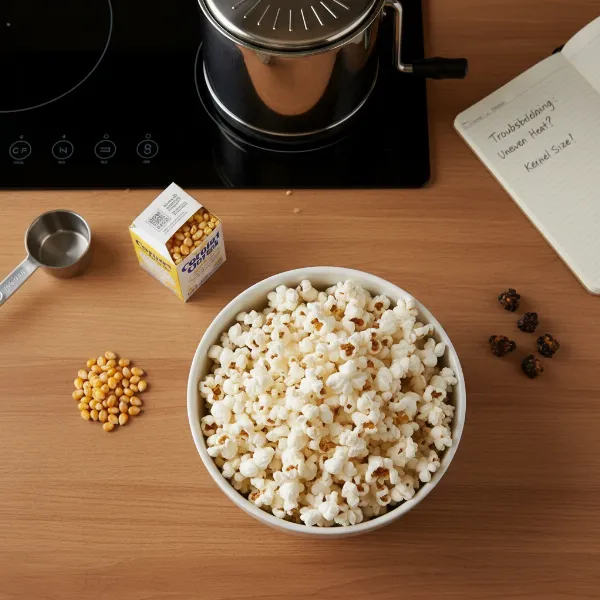 Various popcorn kernels in different states (unpopped, burnt, perfectly popped) next to a popcorn machine.
Table: Common Problems and Quick Solutions
| Problem | Common Causes | Quick Solutions |
|---|---|---|
| Many unpopped kernels | Dry kernels, insufficient heat, old kernels, overcrowding | Rehydrate kernels (add water to jar, shake daily for 1-3 days). Ensure proper preheating. Do not overload popper. Buy fresh, high-quality kernels. |
| Burnt kernels, few popped | Too much heat, kernels stuck to bottom, old oil | Reduce heat slightly. Keep kernels moving (stovetop). Clean your popcorn maker regularly. Use fresh oil for each batch. |
| Small, dense popcorn | Low moisture, low heat, premature popping | Rehydrate kernels. Ensure optimal popping temperature. Don’t remove from heat too early. |
| Uneven popping | Uneven heat distribution, overcrowding | Don’t overload. Shake stovetop poppers frequently. Check your air popper for blockages or signs of uneven air flow. |
| Chewy popcorn | Too much steam trapped, kernels too moist | Ensure lid is slightly vented (if applicable) to allow steam to escape. Dry kernels slightly if too moist (less common). |
Prevention is Key: Tips for Perfect Popcorn Every Time
The best way to avoid unpopped kernels is to start with the right ingredients and practices.
- Buy High-Quality, Fresh Kernels: Invest in reputable brands and check the “best by” date. Fresher kernels are more likely to have optimal moisture content.
- Store Kernels Properly: Always store unpopped popcorn kernels in an airtight container in a cool, dark pantry. Avoid refrigeration, which can dry them out. An airtight seal prevents moisture loss and protects against humidity.
- Follow Popcorn Maker Instructions: Each popcorn maker, whether an air popper, stovetop, or electric oil popper, comes with specific guidelines. Adhere to the recommended quantities for kernels and oil, and follow preheating and cooking instructions.
- Don’t Overload Your Machine: Resist the urge to make an extra-large batch if it exceeds your Popcorn Maker’s capacity. Popping in smaller, appropriate batches ensures even heat and better results.
- Use the Right Oil (for oil poppers): Coconut oil or peanut oil are often recommended for their high smoke points and ability to transfer heat efficiently, contributing to a better pop.
Conclusion
The quest for perfectly popped popcorn can sometimes feel like a culinary challenge, but with a solid understanding of the factors at play—primarily moisture content, heat, and kernel quality—you can significantly reduce those pesky unpopped kernels. By implementing these troubleshooting tips and best practices, from rehydrating dry kernels to optimizing your popping technique and storage, you’ll be well on your way to enjoying a consistently fluffy, delicious bowl of popcorn. What’s your secret for achieving the perfect pop, or what was the most surprising thing you learned about why popcorn kernels fail to burst?
Frequently Asked Questions
Can I rehydrate old popcorn kernels?
Yes, absolutely! If your popcorn kernels are old and dry, you can rehydrate them by placing them in a jar with 1-2 teaspoons of water. Seal the jar and shake it daily for 24 hours up to three days to evenly distribute the moisture. This simple trick often revives the kernels, increasing their chances of popping beautifully.
What is the ideal temperature for popping popcorn?
For optimal popping, popcorn kernels generally need to reach an internal temperature of around 350-460°F (175-238°C). This temperature range ensures that the moisture inside the kernel quickly turns to steam, building enough pressure to burst the hull. Too low a temperature will result in unpopped kernels, while too high can lead to burning.
How does popcorn kernel moisture content affect popping?
Moisture content is critical for popcorn to pop. Kernels require an ideal moisture level, typically between 14-15%. This internal water converts into steam when heated, creating the pressure needed to rupture the hull. If the kernels are too dry, there isn’t enough moisture for this process; if they are too wet, the hull may not be strong enough to withstand the pressure, leading to a less efficient pop.
Why do some popcorn kernels never pop, no matter what?
Some kernels, often called “old maids,” simply won’t pop due to inherent flaws. These might include an insufficient amount of moisture, a compromised or cracked hull that allows steam to escape, or a hull that is too thick or too brittle to rupture effectively. Even with perfect conditions, a small percentage of unpopped kernels is common due to natural variations.
How can I store popcorn kernels to keep them fresh?
To maintain optimal freshness and moisture content, store unpopped popcorn kernels in an airtight container. Keep the container in a cool, dark place, such as a pantry, away from direct sunlight and excessive humidity. Proper storage prevents the kernels from drying out or absorbing too much moisture, ensuring a better pop when you’re ready to use them.