A fan that refuses to spin can quickly turn a comfortable room into a stifling one. Whether it’s a silent sentinel overhead or a stationary desk companion, a non-working fan is a common household nuisance. The good news is that many fan issues can be diagnosed and fixed with a bit of patience and the right know-how. This guide will walk you through the common culprits behind a fan’s stubborn stillness and empower you with step-by-step troubleshooting solutions.
Understanding Your Fan’s Silence: Common Causes
Before you grab your toolbox, understanding why your fan isn’t spinning is the first step toward a solution. Several factors, from simple power issues to more complex motor problems, can cause a fan to cease operation.
Lack of Power
This is often the most straightforward, yet overlooked, cause. A fan needs a consistent power supply to operate.
- Tripped Circuit Breaker or Blown Fuse: Your fan might be on a circuit that’s overloaded or has experienced a power surge, causing the breaker to trip or a fuse to blow. [cite: 1 (of 5 searches for “How to troubleshoot a fan that won’t spin”), 1 (of 5 searches for “reasons why a fan stops working”)]
- Faulty Wall Switch or Outlet: The switch controlling the fan or the outlet it’s plugged into could be defective. [cite: 1, 2 (of 5 searches for “reasons why a fan stops working”)]
- Loose Connections: Internally, a wire might have come loose, interrupting the flow of electricity to the motor. [cite: 1 (of 5 searches for “How to troubleshoot a fan that won’t spin”), 1 (of 5 searches for “reasons why a fan stops working”)]
- Remote Control Malfunctions: For fans operated by remote, dead batteries or signal interference can prevent them from turning on. [cite: 5 (of 5 searches for “How to troubleshoot a fan that won’t spin”), 4 (of 3 searches for “ceiling fan not spinning but light works”)]
|
Our Picks for the Best Popcorn maker in 2026
As an Amazon Associate I earn from qualifying purchases.
|
||
| Num | Product | Action |
|---|---|---|
| 1 | Dash Fresh Pop Popcorn Maker - Oil-Free, Air Popcorn Popper - With Measuring Cup & Recipe Guide - Perfect for Movie Nights - 16 Cups, Aqua |

|
| 2 | Original Whirley Pop Popcorn Maker - Wabash Valley Farms Gourmet Popcorn Popper, Aluminum Pot With Nylon Gears, 3-Minute Stove Top Popper, Home Movie Night (Silver) |
|
| 3 | Presto 04863 Poplite Hot Air Popcorn Popper - Built-In Measuring Cup + Melts Butter, Easy to Clean, Built-In Cord Wrap, 18 Cups, Red |
|
| 4 | VEVOR Commercial Popcorn Machine, 8 Oz Kettle, 850 W Countertop Popcorn Maker for 48 Cups per Batch, Theater Style Popper with 3-Switch Control Steel Frame Tempered Glass Doors 2 Scoops 2 Spoons, Red |
|
| 5 | Dash SmartStore Deluxe Stirring Popcorn Maker - Hot Oil Electric Popcorn Popper with Butter-Warming Tray, Clear Serving Bowl, Storage Lid & Measuring Cup - 24 Cups, Red |
|
| 6 | Hot Air Popper Popcorn Maker, 1200W Popcorn Machine, 4.5-Quart Air Popper for Family Movie Nights, Popcorn Popper, Fast 2-Min Popcorn Maker Machine, Popcorn Popper |
|
| 7 | Black Vintage Commercial Popcorn Machine with Cart & Warmer Light - 12oz Stainless Steel Popper Makes 60 Cups for Theater, Parties & Home Use |
|
| 8 | West Bend Stir Crazy Hot Oil Popcorn Popper, Popcorn Maker Machine with Large Serving Bowl Lid and Stirring Rod Perfect for Movie Night Snack Time or Parties, 6-Quart, Red |
|
| 9 | Dash Fresh Pop Popcorn Maker - Oil-Free, Air Popcorn Popper - With Measuring Cup & Recipe Guide - Perfect for Movie Nights - 16 Cups, White |
|
| 10 |
|
|
Mechanical Obstructions
Sometimes, the problem isn’t electrical at all, but purely physical.
- Dust and Debris Buildup: Over time, dust, lint, and pet hair can accumulate around the motor shaft or within the fan housing, jamming the blades. [cite: 5 (of 5 searches for “How to troubleshoot a fan that won’t spin”), 2 (of 5 searches for “reasons why a fan stops working”)]
- Bent or Warped Blades: Damaged blades can strike the fan housing or become unbalanced, preventing smooth rotation. [cite: 5 (of 5 searches for “How to troubleshoot a fan that won’t spin”), 3 (of 3 searches for “ceiling fan not spinning but light works”)]
- Foreign Objects: Small objects can sometimes fall into the fan’s mechanism, causing it to seize.
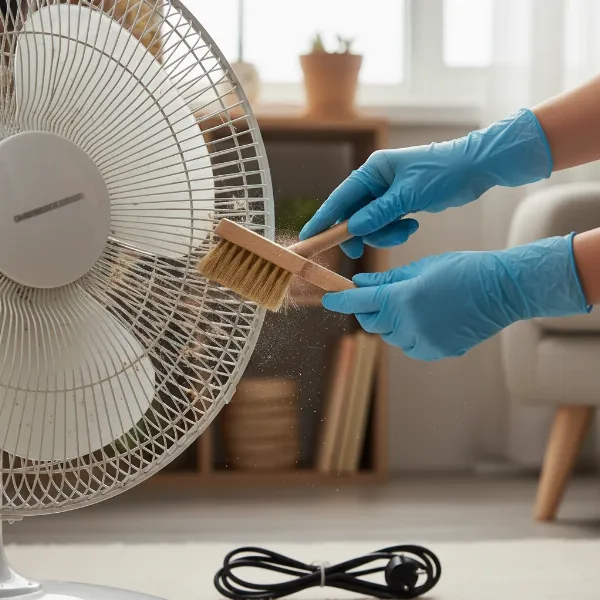 A person inspecting and cleaning a dusty fan blade to remove accumulated debris.
Motor & Bearing Issues
The heart of any fan is its motor, and issues here can be a primary reason for non-spinning blades.
- Seized Motor Bearings: This is a very common problem, especially in older fans or those used frequently. The lubricant around the motor bearings can dry out or turn into a sticky “gunk,” causing friction that prevents the motor from turning. [cite: 2, 3 (of 5 searches for “How to troubleshoot a fan that won’t spin”), 1, 2 (of 5 searches for “reasons why a fan stops working”)] A fan that hums but won’t spin freely by hand is a strong indicator of seized bearings. [cite: 3 (of 5 searches for “How to troubleshoot a fan that won’t spin”)]
- Motor Winding Damage: Overheating or prolonged use can damage the motor windings, leading to complete failure.
Faulty Capacitors
Many AC fans, particularly ceiling fans and older models, rely on a capacitor to provide the initial surge of electricity needed to start the motor.
- If your fan hums but doesn’t spin, or requires a manual push to get started, a faulty capacitor is a likely culprit. [cite: 1 (of 3 searches for “ceiling fan not spinning but light works”), 3 (of 5 searches for “reasons why a fan stops working”)] Visually, a bulging or leaking capacitor is a clear sign of failure. [cite: 5 (of 5 searches for “How to troubleshoot a fan that won’t spin”)]
Wiring Problems
Beyond loose connections, more specific wiring issues can prevent your fan from operating.
- Blown Thermal Fuse: Some fans include a thermal fuse designed to blow and cut power if the motor overheats, protecting it from further damage. [cite: 3, 4 (of 5 searches for “How to troubleshoot a fan that won’t spin”)]
Essential Tools for Fan Troubleshooting
Before you begin, gather these common household tools:
- Screwdrivers: Philips and flathead for opening fan housings.
- Multimeter or Circuit Tester: To test for electrical continuity and power flow.
- Lubricating Oil: Lightweight machine oil (like sewing machine oil) for bearings.
- Cleaning Supplies: Microfiber cloths, compressed air, or a soft brush for dust removal.
- Flashlight: To illuminate dark internal components.
- Electrical Tape (Optional): For minor wiring repairs, though replacement is often best for damaged wires.
Troubleshooting Steps: A Diagnostic Walkthrough
Ready to get your fan spinning again? Follow these steps, always prioritizing safety.
Step 1: Safety First – Disconnect Power
This is the most critical step. Always turn off the power to the fan at the circuit breaker before performing any inspection or repair. Do not rely solely on the fan’s switch. [cite: 1 (of 5 searches for “How to troubleshoot a fan that won’t spin”), 3 (of 5 searches for “exhaust fan troubleshooting guide”)]
Step 2: Check the Power Supply
Confirm that electricity is reaching your fan.
- Circuit Breaker & Fuse Box: Locate your home’s main electrical panel and check if the breaker for the fan’s circuit has tripped. If it has, flip it back to the “ON” position. For fuse boxes, check and replace any blown fuses.
- Wall Switch & Outlet: If it’s a plug-in fan, try plugging another appliance into the same outlet to ensure the outlet is functional. For wall-switched fans, test the switch for power using a circuit tester. If the light works but the fan doesn’t, it indicates the power supply to the unit is fine, and the problem lies within the fan itself. [cite: 5 (of 5 searches for “How to troubleshoot a fan that won’t spin”)]
- Remote Control (if applicable): Replace the batteries in the remote. If that doesn’t work, try reprogramming it according to your fan’s manual.
Step 3: Inspect for Mechanical Obstructions
With the power safely off, examine the fan’s physical components.
- Clear Debris and Dust: Remove any grilles or covers to access the blades and motor. Thoroughly clean away any dust, lint, or hair that might be impeding blade movement or clogging the motor. Use compressed air or a soft brush. [cite: 5 (of 5 searches for “How to troubleshoot a fan that won’t spin”), 1 (of 3 searches for “ceiling fan not spinning but light works”)]
- Manually Spin Blades: Gently try to spin the fan blades by hand. Do they turn freely and smoothly? If there’s resistance or they feel gritty, seized bearings or a physical obstruction are likely. If they spin freely but the fan still doesn’t work when powered, the issue is likely electrical. [cite: 1 (of 5 searches for “How to troubleshoot a fan that won’t spin”), 2 (of 3 searches for “stand fan motor not spinning”)]
Step 4: Assess Motor and Bearings
If mechanical obstruction isn’t the issue, focus on the motor.
- Listen for Humming: Turn the power back on briefly. If you hear a humming sound but the blades don’t spin, it’s a strong sign of seized bearings or a bad capacitor. Immediately turn the power off again. [cite: 1 (of 3 searches for “ceiling fan not spinning but light works”), 1 (of 3 searches for “stand fan motor not spinning”)]
- Lubricate Bearings: If the blades are stiff or hum without spinning, the motor bearings likely need lubrication. For most fans, you’ll need to disassemble the motor housing to access the motor shaft and bearings. Apply a few drops of lightweight machine oil (like sewing machine oil) to the front and rear motor bearings. Spin the shaft by hand to help the oil penetrate. Some pedestal fans are particularly prone to this issue and can be revived with a drop of oil. [cite: 5 (of 3 searches for “stand fan motor not spinning”)]
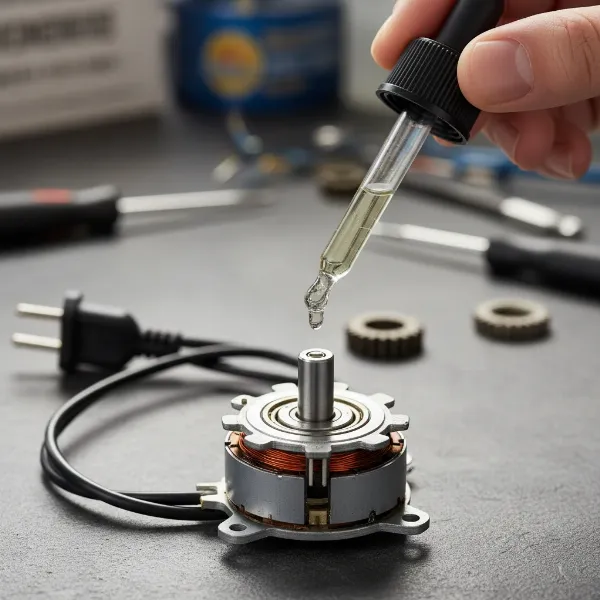 Hands applying lubricating oil to the bearings of an exposed electric fan motor shaft.
Step 5: Test the Capacitor (If Applicable)
If your fan hums but doesn’t start, or starts slowly, the capacitor is a prime suspect.
- Visual Inspection: With the power off, locate the capacitor, usually a cylindrical component. Look for any signs of bulging, leaking fluid, or burn marks. [cite: 5 (of 5 searches for “How to troubleshoot a fan that won’t spin”)]
- Replacement: Replacing a capacitor can be a DIY task for those comfortable with electronics, but it’s crucial to use a replacement with identical specifications (microfarads and voltage rating). Always discharge the capacitor safely before handling, as it can store an electrical charge even after power is off. If unsure, consider professional help. [cite: 3 (of 5 searches for “exhaust fan troubleshooting guide”)]
Step 6: Examine Internal Wiring
This step requires more caution and possibly a multimeter.
- Loose Connections: Carefully inspect all visible wire connections inside the fan’s housing, canopy (for ceiling fans), or control panel. Tighten any loose screws on terminals. [cite: 1 (of 5 searches for “How to troubleshoot a fan that won’t spin”), 1 (of 5 searches for “reasons why a fan stops working”)]
- Blown Thermal Fuse: If you suspect a thermal fuse, you’ll typically need a multimeter to test for continuity across it. If there’s no continuity, the fuse is blown and needs replacement. This is a delicate repair and might be best left to a professional, as changing the fuse can be difficult. [cite: 4 (of 5 searches for “How to troubleshoot a fan that won’t spin”)]
Troubleshooting by Fan Type
While the core principles remain, specific fan types have unique considerations.
Ceiling Fans
- Pull Chains: Ensure the fan’s pull chain is fully engaged. Sometimes, it can get stuck between settings. [cite: 5 (of 5 searches for “How to troubleshoot a fan that won’t spin”)]
- Reverse Switch: Most ceiling fans have a small switch on the motor housing to reverse blade direction. If it’s caught between settings, the fan may not spin. Ensure it’s fully engaged in either the “up” or “down” position. [cite: 3 (of 3 searches for “ceiling fan not spinning but light works”)]
Standing/Box Fans
- Oscillating Mechanism: If your fan oscillates, check the mechanism for binding or seized parts. Lubrication can often resolve this. [cite: 2 (of 5 searches for “reasons why a fan stops working”)] Bearings in these fans are particularly prone to drying out. [cite: 5 (of 3 searches for “stand fan motor not spinning”)]
Exhaust Fans
- Duct Blockages: For bathroom or kitchen exhaust fans, debris, dust, or even pest nests can block the ductwork, preventing the fan from moving air and potentially seizing the motor. Check the exhaust vent hood and internal ducts. [cite: 5 (of 5 searches for “exhaust fan troubleshooting guide”)]
- Flapper Issues: The flapper in the exhaust vent hood might be jammed shut, impeding airflow and preventing the fan from spinning properly. [cite: 5 (of 5 searches for “exhaust fan troubleshooting guide”)]
AC Outdoor Unit Fans
- Clear Debris: Outdoor AC units are highly susceptible to leaves, twigs, and grass clippings clogging the fan grilles. Clear all visible obstructions. [cite: 5 (of 5 searches for “How to troubleshoot a fan that won’t spin”)]
- Capacitor: As with other fans, a faulty capacitor can prevent the AC fan from spinning. These are often visually identifiable by bulging or leaking. [cite: 5 (of 5 searches for “How to troubleshoot a fan that won’t spin”)] For AC units, it’s often best to consult an HVAC professional.
When to Call a Professional
While many fan issues are DIY-friendly, some situations warrant professional help.
- Complex Electrical Issues: If you’re uncomfortable working with electrical wiring, testing voltages with a multimeter, or suspect issues beyond simple loose connections, it’s safer to call a licensed electrician. Electrical hazards can be serious. [cite: 1 (of 5 searches for “How to troubleshoot a fan that won’t spin”)]
- Motor Replacement: If the motor itself is burnt out or extensively damaged, replacing the entire fan or hiring a professional for motor replacement might be necessary.
- Lack of Confidence: If any step feels beyond your comfort level or expertise, don’t hesitate to seek a qualified technician.
Maintaining Your Fan to Prevent Future Issues
Regular maintenance can significantly extend your fan’s lifespan and prevent many common problems.
- Regular Cleaning: Routinely dust fan blades, grilles, and accessible motor areas to prevent buildup.
- Lubrication: For fans with accessible bearings, apply a few drops of lightweight oil annually, especially before or after periods of heavy use.
- Proper Storage: Store portable fans in a clean, dry place when not in use to prevent dust accumulation and bearing issues.
- Check Wiring: Periodically inspect visible power cords and plugs for damage or fraying.
Conclusion
A fan that won’t spin can be a real inconvenience, but by systematically working through these troubleshooting steps, you can often pinpoint and resolve the problem yourself. From checking the power supply and clearing obstructions to lubricating bearings and inspecting capacitors, many common issues are within reach of the average homeowner. Remember to prioritize safety by always disconnecting power before any inspection or repair. With a little effort, you can often bring your silent fan back to life, restoring comfort and airflow to your space. If the problem persists or you encounter complex electrical issues, don’t hesitate to consult a professional.
Are you ready to tackle your non-spinning fan, or have you already successfully fixed one with these tips?
Frequently Asked Questions
Why is my fan humming but not spinning?
A humming fan that doesn’t spin typically indicates either seized motor bearings or a faulty capacitor. The motor is receiving power and trying to turn, but it can’t overcome the friction from the bearings or lacks the initial “kick” from the capacitor. Cleaning and lubricating the bearings or replacing the capacitor are common solutions. [cite: 1 (of 3 searches for “ceiling fan not spinning but light works”), 1 (of 3 searches for “stand fan motor not spinning”)]
Can a fan be fixed if the motor is seized?
Yes, often a seized fan motor can be fixed. The most common cause of a seized motor is dried-out or gummed-up bearings. By carefully disassembling the fan and applying a proper lubricating oil to the motor shaft and bearings, you can often free up the motor and restore function. If the motor windings themselves are burnt, however, replacement is usually necessary. [cite: 3 (of 5 searches for “How to troubleshoot a fan that won’t spin”), 2 (of 5 searches for “reasons why a fan stops working”)]
How do I know if my fan capacitor is bad?
A bad fan capacitor often manifests as a fan that hums but won’t start spinning on its own, or spins very slowly. Visually, a capacitor that is bulging, leaking fluid, or shows burn marks is definitely faulty. You can also test a capacitor’s capacitance with a multimeter, but this requires electrical knowledge and safety precautions.