Imagine the irresistible aroma of freshly popped popcorn wafting through a school carnival or a major event – it’s a timeless crowd-pleaser that generates excitement and revenue. But choosing the right commercial popcorn machine isn’t just about picking any model; it’s about investing in a reliable, high-capacity workhorse that can keep up with demand, deliver consistent quality, and withstand the rigors of frequent use. This comprehensive guide will navigate you through the essential factors, popular types, and top considerations to help you find the perfect popcorn machine that will serve your school or event flawlessly for years to come.
Popular Types of Popcorn Makers for Commercial Use
When it comes to high-volume settings like schools and events, not all popcorn makers are created equal. While household models serve their purpose, commercial environments demand specific features and robust construction.
Kettle-Style Popcorn Machines (Oil Poppers)
These are the quintessential commercial popcorn machines, designed to replicate the classic movie theater experience. They feature a heated kettle where oil and kernels are combined, producing delicious, perfectly coated popcorn.
- Advantages: Kettle-style machines excel in producing crispy, flavorful popcorn with a consistent texture. They offer high output capacity, often equipped with warming decks to keep popcorn fresh and hot. Many models come with convenient features like automatic stirring mechanisms and built-in heat lamps.
- Disadvantages: These machines require cooking oil, which adds to calorie content and necessitates more thorough cleaning compared to air poppers. Initial investment can be higher than simpler models.
- Suitable for: High-traffic venues such as school cafeterias, concession stands, sporting events, large fundraisers, festivals, and community gatherings. Their ability to produce large batches quickly makes them ideal for satisfying a crowd.
|
Our Picks for the Best Popcorn maker in 2026
As an Amazon Associate I earn from qualifying purchases.
|
||
| Num | Product | Action |
|---|---|---|
| 1 | Dash SmartStore Deluxe Stirring Popcorn Maker - Hot Oil Electric Popcorn Popper with Butter-Warming Tray, Clear Serving Bowl, Storage Lid & Measuring Cup - 24 Cups, Red |

|
| 2 | VEVOR Commercial Popcorn Machine, 8 Oz Kettle, 850 W Countertop Popcorn Maker for 48 Cups per Batch, Theater Style Popper with 3-Switch Control Steel Frame Tempered Glass Doors 2 Scoops 2 Spoons, Red |
|
| 3 | Dash Fresh Pop Popcorn Maker - Oil-Free, Air Popcorn Popper - With Measuring Cup & Recipe Guide - Perfect for Movie Nights - 16 Cups, Red |
|
| 4 | Original Whirley Pop Popcorn Maker - Wabash Valley Farms Gourmet Popcorn Popper, Aluminum Pot With Nylon Gears, 3-Minute Stove Top Popper, Home Movie Night (Silver) |
|
| 5 | Hot Air Popper Popcorn Maker, 1200W Popcorn Machine, 4.5-Quart Air Popper for Family Movie Nights, Popcorn Popper, Fast 2-Min Popcorn Maker Machine, Popcorn Popper |
|
| 6 | West Bend Stir Crazy Hot Oil Popcorn Popper, Popcorn Maker Machine with Large Serving Bowl Lid and Stirring Rod Perfect for Movie Night Snack Time or Parties, 6-Quart, Red |
|
| 7 | Dash Fresh Pop Popcorn Maker - Oil-Free, Air Popcorn Popper - With Measuring Cup & Recipe Guide - Perfect for Movie Nights - 16 Cups, White |
|
| 8 | Presto 04863 Poplite Hot Air Popcorn Popper - Built-In Measuring Cup + Melts Butter, Easy to Clean, Built-In Cord Wrap, 18 Cups, Red |
|
| 9 | Dash Fresh Pop Popcorn Maker - Oil-Free, Air Popcorn Popper - With Measuring Cup & Recipe Guide - Perfect for Movie Nights - 16 Cups, Aqua |
|
| 10 | Black Vintage Commercial Popcorn Machine with Cart & Warmer Light - 12oz Stainless Steel Popper Makes 60 Cups for Theater, Parties & Home Use |
|
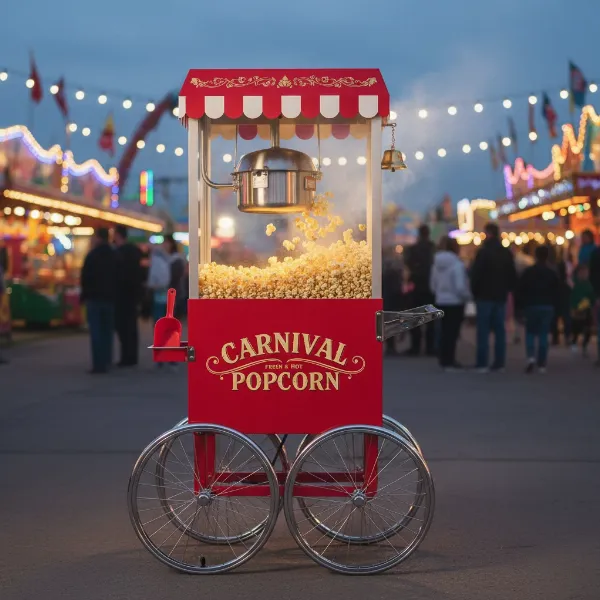 A classic red commercial kettle popcorn machine with freshly popped popcorn inside
Commercial Hot Air Poppers
While less common in high-volume commercial settings than kettle models, commercial hot air poppers offer a healthier alternative by popping kernels using only hot air, eliminating the need for oil.
- Advantages: As they use no oil, the popcorn produced is lower in calories and fat, appealing to health-conscious consumers. They are generally easier to clean than oil-based machines and operate quickly.
- Disadvantages: Hot air popped corn can sometimes be drier and less flavorful without the oil and butter. It may not hold flavorings and seasonings as effectively as oil-popped kernels. Larger commercial hot air units might still struggle with the rapid, continuous output required for very large events compared to kettle poppers.
- Suitable for: Health-focused events, smaller school events where a healthier snack option is preferred, or environments where oil use might be a concern.
Stovetop Popcorn Makers
Stovetop Popcorn Makers, typically large pots with a stirring mechanism, are generally designed for home use. They are rarely suitable for commercial environments due to their limited capacity and manual operation.
- Advantages: They are inexpensive and allow for precise control over the popping process for small batches.
- Disadvantages: They require constant manual attention, have very low output, and are impractical for serving large groups efficiently. Cleaning can be cumbersome, and consistency across multiple batches is hard to maintain.
- Suitable for: Absolutely not recommended for schools or events. Their place is in a home kitchen.
Comparison Table of Popcorn Maker Types for Events
| Feature | Kettle-Style (Oil Popper) | Commercial Hot Air | Stovetop (Not Recommended for Events) |
|---|---|---|---|
| Price | Medium to High | Medium | Low |
| Health | Medium (uses oil) | High (oil-free) | Medium (depends on oil used) |
| Flavor | Rich, authentic movie theater | Lighter, drier | Customizable (small batches) |
| Ease of Use | Easy (automated kettles) | Easy | Manual, requires attention |
| Cleaning | Moderate (oil residue) | Easy | Difficult (for large batches) |
| Capacity | High volume, continuous | Medium (for commercial variants) | Very low, single batch |
| Durability | High | High | Moderate |
Guide to Choosing the Right Commercial Popcorn Machine
Selecting the ideal popcorn machine involves a careful assessment of your specific needs, the features available, and your budget.
Determine Usage Needs
Start by clearly defining who you’ll be serving and how often.
- Audience Size: How many people do you expect to serve per hour or per event? A small school bake sale might need an 8-ounce kettle, while a large school carnival or sports event could demand a 16-ounce or even higher capacity machine to handle peak times.
- Popcorn Preference: Do your customers prefer classic, buttery popcorn, or is there a demand for healthier, oil-free options? This will guide your choice between kettle-style and hot air models.
- Frequency of Use: Will the machine be used daily in a cafeteria or only for occasional events? Higher frequency demands more robust, durable construction.
Consider Important Features
Commercial popcorn machines come with a range of features that enhance performance, safety, and user experience.
- Capacity: Measured in ounces (oz) of kernels the kettle can hold per batch. Common commercial sizes range from 8 oz to 16 oz, with larger machines for very high demand. An 8 oz kettle can typically produce about 18 servings per hour, while a 16 oz kettle can double that.
- Power and Speed: Look at the wattage. Higher wattage generally means faster heating and quicker popping cycles, which is crucial during busy periods. Machines capable of popping large batches in 3-5 minutes are highly efficient.
- Durability and Material: Commercial machines should be built to last. Stainless steel, tempered glass, and aluminum kettles are standard for their resilience, ease of cleaning, and resistance to rust and corrosion. A robust build ensures longevity and consistent performance.
- Warming Deck/Heat Lamp: Essential for keeping popcorn fresh, warm, and crispy after popping. Many commercial models include an air-rated warming shelf or a built-in heat lamp. Some even have a butter melter feature.
- Ease of Cleaning: An easy-to-clean design with removable parts, non-stick kettles, and accessible surfaces will save significant time and effort, especially for regular use.
- Safety Features: Look for certifications, sturdy construction, and clear operating instructions. Tempered glass panels are safer than regular glass.
- Portability/Mobility: If you plan to move the machine between different locations (e.g., school gym, football field, community hall), consider models with carts and wheels for easy transport. Countertop models are suitable for fixed locations.
- Accessories: Many machines come with essential accessories like scoops, measuring cups, and even popcorn bags to get you started immediately.
Budget Considerations
Commercial popcorn machines represent an investment. Balance the upfront cost with the potential for revenue generation and the machine’s lifespan.
- Initial Investment: Commercial machines range in price based on capacity, brand, and features.
- Operating Costs: Factor in the cost of kernels, oil (if applicable), seasoning, and electricity.
- Return on Investment (ROI): A well-chosen machine can quickly pay for itself through sales, making it a valuable asset for fundraising or generating profits.
Reputable Brands
Opting for established brands often guarantees better quality, reliability, and customer support. Brands frequently praised in the commercial sector include Paragon, Great Northern Popcorn, Nostalgia, and VEVOR. Reading user reviews for specific models from these manufacturers can provide valuable insights into real-world performance.
Where to Purchase
For commercial-grade equipment, consider:
- Specialized Concession Supply Stores: These retailers offer a wide selection and expert advice.
- Online Retailers: Large e-commerce platforms often carry a broad range of commercial models with competitive pricing and delivery options. Always verify seller reputation and return policies.
Important Considerations When Using a Commercial Popcorn Maker
Maximizing the lifespan and performance of your commercial popcorn machine requires proper usage and maintenance.
Read the User Manual Thoroughly
Every machine has specific operational guidelines. Familiarize yourself with the manufacturer’s instructions for setup, operation, and cleaning to ensure safe and efficient use. Adhering to these guidelines is crucial for both performance and warranty validity.
Use the Correct Type of Popcorn and Oil
For optimal results, use commercial-grade popcorn kernels. These are often larger and designed for better expansion. If using a kettle-style machine, invest in high-quality popping oil (e.g., coconut oil, sunflower oil) and follow recommended ratios to prevent burning and achieve the best flavor. Using the right ingredients makes a significant difference in the final product.
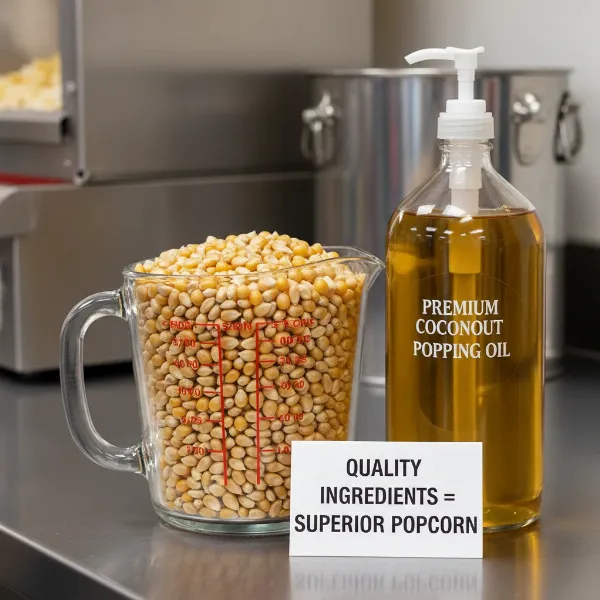 High-quality popcorn kernels and popping oil, ready for commercial popcorn machine preparation
Clean the Machine Regularly
Cleaning is paramount for hygiene, longevity, and consistent taste.
- After Each Use: Wipe down all surfaces, especially the kettle, warming deck, and glass panels, to remove oil residue and unpopped kernels.
- Deep Cleaning: Periodically disassemble removable parts for a more thorough cleaning to prevent buildup that can affect performance and taste. Stainless steel and tempered glass are generally easy to maintain.
Store and Maintain Properly
- Location: Store the machine in a dry, cool, and well-ventilated area when not in use.
- Care: Avoid harsh chemicals or abrasive cleaners that can damage surfaces. Check for loose parts or wear and tear periodically and address them promptly.
“A commercial popcorn machine is more than just an appliance; it’s a revenue generator and a crowd-pleaser. Investing in a durable, high-capacity model with easy-to-clean features is paramount for successful long-term operation at any school or event.” – Ava Chen, Concessions Equipment Specialist
Conclusion
Choosing the best commercial popcorn machine for your school or event hinges on understanding your specific needs for capacity, durability, and functionality. Whether you opt for a robust kettle-style popper for that authentic movie theater taste and high output, or a commercial hot air model for a healthier alternative, careful consideration of features like capacity, warming functions, and ease of cleaning is essential. By investing in a quality machine and maintaining it properly, you’ll ensure a steady supply of delicious popcorn, delighted attendees, and a successful operation. What kind of unforgettable popcorn experience will you create for your next event?
Frequently Asked Questions
What popcorn machine size is best for a school carnival?
For a school carnival, a 12-ounce or 16-ounce kettle-style popcorn machine is generally recommended. This capacity allows for continuous popping to keep up with high demand, minimizing wait times and ensuring a steady supply of fresh popcorn for large crowds.
How do I maintain a commercial popcorn machine for longevity?
Regular cleaning is key. After each use, wipe down the kettle and interior, removing oil and unpopped kernels. Periodically, deep clean removable parts with warm soapy water. Ensure the machine is stored in a dry environment and follow the manufacturer’s guidelines for specific care instructions.
Are commercial hot air popcorn machines suitable for large events?
While excellent for healthier, oil-free popcorn, commercial hot air poppers typically have a lower continuous output compared to kettle-style machines. They might be suitable for smaller events or specific dietary needs, but for very large crowds requiring high volume and classic flavor, a kettle-style machine is usually more efficient.
What are the essential accessories for a commercial popcorn machine?
Key accessories include a popcorn scoop for serving, measuring cups for kernels and oil, popcorn bags or boxes for packaging, and commercial-grade popping oil and kernels. A mobile cart with wheels can also be essential if the machine needs to be moved between locations.