Imagine waking up to the rich aroma of freshly roasted coffee, knowing you perfected every bean yourself. While it might sound like a task reserved for professional baristas, the truth is, home coffee roasting is remarkably accessible, and a simple popcorn maker can be your gateway to this rewarding experience. As someone with over a decade of experience across all types of popcorn machines, I’ve seen firsthand how these versatile appliances can be repurposed for more than just movie night snacks. This guide will walk you through transforming an ordinary popcorn maker into an efficient coffee roaster, helping you achieve café-quality beans right in your kitchen. Get ready to discover the unparalleled freshness and flavor that only home-roasted coffee can deliver.
Why Roast Your Own Coffee Beans at Home?
The journey of coffee from bean to cup is an intricate one, and roasting is arguably the most transformative step. When you roast coffee beans yourself, you unlock a level of freshness and customization that store-bought options simply can’t match. You gain complete control over the roast profile, allowing you to tailor the flavor to your exact preferences, from a light, vibrant acidity to a bold, smoky dark roast. Beyond the exquisite taste, home roasting is a fascinating hobby that connects you more deeply with your daily brew, offering a creative outlet and a consistent supply of superior coffee without breaking the bank. It’s an affordable adventure that elevates your coffee experience.
Choosing the Right Popcorn Maker for Coffee Roasting
Not all popcorn makers are created equal when it comes to roasting coffee. The ideal candidate for this task is a hot air popcorn popper. Unlike stovetop or oil-based models, hot air poppers use a powerful heating element and fan to circulate hot air, mimicking the fluidized bed technology found in professional coffee roasters. This ensures the beans are constantly agitated and heated evenly, crucial for a consistent roast.
Look for a hot air popper with these characteristics:
- Metal Popping Chamber: This is essential for durability and heat retention. Plastic chambers can melt or warp under the prolonged high temperatures required for coffee roasting.
- Side Air Vents: Poppers with vents on the side of the chamber, rather than solely at the bottom, promote better airflow and bean agitation. This helps prevent scorching and ensures a more uniform roast.
- Strong Fan and Heating Element: A robust fan keeps the beans moving vigorously, while a powerful heating element quickly brings them to roasting temperature. Older or less powerful models might struggle to reach the necessary heat or maintain adequate agitation.
- Simple On/Off Switch: The less complex the controls, the better. You primarily need control over the heat and airflow, which most hot air poppers provide through their single on/off switch.
Avoid stovetop popcorn makers, as they offer less consistent heat and agitation, often leading to unevenly roasted beans. Electric oil poppers are also not recommended due to the added oil, which is unnecessary and undesirable for coffee roasting.
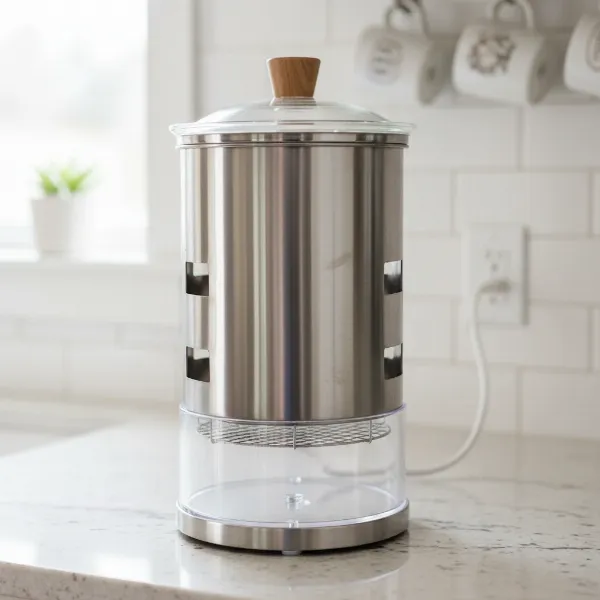 A hot air popcorn popper with a metal chamber, ideal for home coffee roasting.
Essential Equipment for Home Coffee Roasting
Before you begin your roasting adventure, gathering the right tools is crucial for both success and safety. Here’s a checklist of what you’ll need:
- Hot Air Popcorn Popper: As discussed, this is your primary roasting device. Ensure it’s clean and in good working order.
- Green Coffee Beans: The unroasted raw material. You can find these at specialty coffee shops, online retailers, or dedicated green coffee suppliers. Start with a smaller batch to experiment.
- Measuring Cup or Scale: For consistent batch sizes. Typically, 1/2 to 1 cup (or 75-110 grams) of green beans is a good starting point, depending on your popper’s capacity.
- Metal Colanders or Baking Sheet: Two metal colanders are ideal for quickly cooling the beans after roasting. A large baking sheet works too.
- Heat-Resistant Utensil: A long spoon or spatula can be useful for initial agitation if the beans aren’t moving freely.
- Timer: To accurately track your roast time, which is critical for achieving desired roast levels.
- Airtight Containers: For storing your freshly roasted beans. Containers with one-way valves are excellent for allowing de-gassing while keeping oxygen out.
- Fire Extinguisher: A non-negotiable safety item. Always keep it within arm’s reach.
- Ventilation: A well-ventilated area, preferably outdoors, or near a strong kitchen exhaust fan and open windows.
Having everything prepared before you start will make the process smoother and minimize frantic scrambling during the fast-paced roast.
Step-by-Step Guide to Roasting Coffee with a Popcorn Maker
Roasting coffee at home with a popcorn maker is an exhilarating process that can be mastered with practice and attention to detail. Follow these steps to achieve delicious, freshly roasted beans:
Preparation is Key
|
Our Picks for the Best Popcorn maker in 2026
As an Amazon Associate I earn from qualifying purchases.
|
||
| Num | Product | Action |
|---|---|---|
| 1 | Presto 04863 Poplite Hot Air Popcorn Popper - Built-In Measuring Cup + Melts Butter, Easy to Clean, Built-In Cord Wrap, 18 Cups, Red |

|
| 2 | Dash SmartStore Deluxe Stirring Popcorn Maker - Hot Oil Electric Popcorn Popper with Butter-Warming Tray, Clear Serving Bowl, Storage Lid & Measuring Cup - 24 Cups, Red |
|
| 3 | Dash Fresh Pop Popcorn Maker - Oil-Free, Air Popcorn Popper - With Measuring Cup & Recipe Guide - Perfect for Movie Nights - 16 Cups, Aqua |
|
| 4 | VEVOR Commercial Popcorn Machine, 8 Oz Kettle, 850 W Countertop Popcorn Maker for 48 Cups per Batch, Theater Style Popper with 3-Switch Control Steel Frame Tempered Glass Doors 2 Scoops 2 Spoons, Red |
|
| 5 | Dash Fresh Pop Popcorn Maker - Oil-Free, Air Popcorn Popper - With Measuring Cup & Recipe Guide - Perfect for Movie Nights - 16 Cups, Red |
|
| 6 | Original Whirley Pop Popcorn Maker - Wabash Valley Farms Gourmet Popcorn Popper, Aluminum Pot With Nylon Gears, 3-Minute Stove Top Popper, Home Movie Night (Silver) |
|
| 7 | Dash Fresh Pop Popcorn Maker - Oil-Free, Air Popcorn Popper - With Measuring Cup & Recipe Guide - Perfect for Movie Nights - 16 Cups, White |
|
| 8 | Black Vintage Commercial Popcorn Machine with Cart & Warmer Light - 12oz Stainless Steel Popper Makes 60 Cups for Theater, Parties & Home Use |
|
| 9 | West Bend Stir Crazy Hot Oil Popcorn Popper, Popcorn Maker Machine with Large Serving Bowl Lid and Stirring Rod Perfect for Movie Night Snack Time or Parties, 6-Quart, Red |
|
| 10 | Hot Air Popper Popcorn Maker, 1200W Popcorn Machine, 4.5-Quart Air Popper for Family Movie Nights, Popcorn Popper, Fast 2-Min Popcorn Maker Machine, Popcorn Popper |
|
First, set up your popcorn maker in a well-ventilated area. Roasting produces significant smoke and a papery byproduct called chaff, so outdoors is ideal, or by an open window with a powerful exhaust fan. Measure your green coffee beans, typically about 1/2 to 1 cup (75-110 grams), ensuring the quantity allows the beans to move freely within the popping chamber without overloading. Place your cooling colanders or baking sheet nearby for quick access once the roast is complete.
The Roasting Process: From Green to Golden
With your workstation ready, switch on your hot air popcorn maker and let it preheat for about 30 seconds to a minute. This ensures an even start to the roast. Once preheated, carefully add the green coffee beans to the popping chamber. Initially, the beans may be too heavy for the air to circulate them effectively; if so, gently stir them with a heat-resistant utensil until the airflow takes over and they begin to tumble on their own. The beans will gradually change color, moving from green to yellow, then to light brown, emitting a grassy aroma.
Listening for the “Cracks”
As the beans heat up, their internal moisture turns into gas, building pressure. This leads to the first crucial auditory cue: First Crack. This sounds like twigs snapping or popcorn popping, usually occurring around 3-5 minutes into the roast at approximately 360-370°F (182-188°C). The aroma will transition from grassy to a more recognizable “coffee” smell. After first crack subsides, the beans continue to roast at an accelerated rate. If you continue roasting, you’ll eventually hear Second Crack, a softer, more rapid “rice krispies” or crackling sound, occurring about a minute or so after first crack. This signifies a darker roast.
Achieving Your Desired Roast Level
Your desired roast level dictates when you stop the process.
- Light Roast: Stop roasting shortly after the first crack has finished. The beans will have a light brown color, retaining more of their original flavor notes.
- Medium Roast: Continue roasting for about 20-40 seconds after first crack. This results in a balanced flavor with more body.
- Medium-Dark to Dark Roast: Extend the roast further, into the beginning of second crack. The beans will be darker brown with some oils starting to emerge on the surface, offering bolder, bittersweet notes.
- French Roast (Very Dark): Roast deeper into a rolling second crack. Be cautious, as beans can quickly go from dark to burnt. This roast is characterized by significant oil and smoky flavors.
Remember, the beans continue to roast for a short time after being removed from the heat, so it’s often best to stop just shy of your target color.
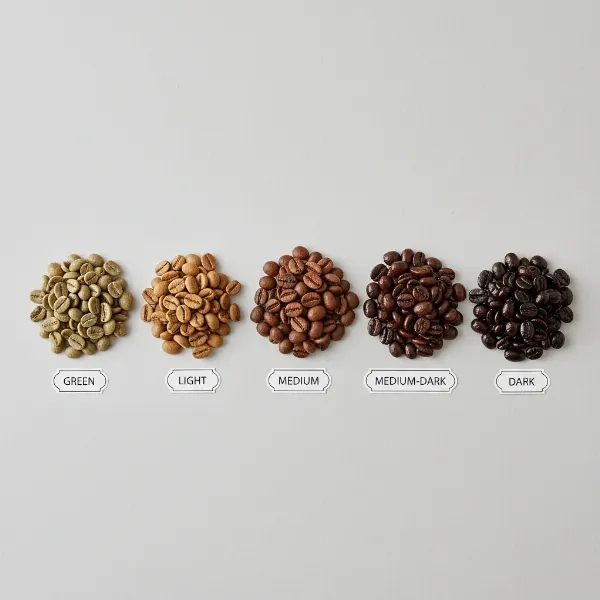 A comparison of coffee beans illustrating different roast levels from light to dark.
Rapid Cooling: A Critical Step
Once your beans reach the desired roast level, immediately remove them from the hot popcorn maker. This is where your metal colanders come into play. Pour the hot beans into one colander, then quickly transfer them back and forth between the two colanders. This rapid agitation and exposure to air cools the beans down swiftly, preventing over-roasting and preserving their flavor profile. Continue cooling until the beans are warm to the touch. Any remaining chaff will also be blown away during this process.
Mastering Your Roast: Tips for Success
Achieving a consistent and delicious roast with a popcorn maker takes practice, but these expert tips can significantly improve your results.
Optimize Your Batch Size
The amount of green coffee beans you roast at once is critical. Overfilling your popcorn maker can hinder proper airflow and lead to uneven roasting, where some beans are scorched while others remain underdeveloped. A good rule of thumb is to use 1/2 to 1 cup (around 75-110 grams) of green beans. The ideal batch size allows the beans to tumble freely and consistently, ensuring even heat distribution throughout the roast. Experiment with slightly smaller batches if you find your beans aren’t moving adequately.
Maintain Consistent Agitation
Especially during the initial stages of roasting, heavier green beans may not agitate perfectly on their own. If you observe beans lying stagnant at the bottom of the chamber, gently assist them with a long, heat-resistant spoon. A subtle tilting of the popper can also encourage movement and promote a more even roast. Continuous, gentle movement is key to preventing scorching and ensuring each bean develops properly.
Prioritize Ventilation
Roasting coffee produces a significant amount of smoke and a fine, papery byproduct called chaff. Adequate ventilation is not just for comfort; it’s a safety measure. Roasting outdoors is the best option, allowing smoke and chaff to dissipate harmlessly. If roasting indoors, operate your popcorn maker directly under a powerful kitchen exhaust fan and open nearby windows. Without proper ventilation, smoke can accumulate, trigger smoke alarms, and leave a lingering aroma in your home.
Effective Chaff Management
Chaff is the dried outer skin of the coffee bean that separates during roasting. While some poppers have a lid that helps contain it, a good strategy is to place a cotton cloth or a bowl directly under the popcorn chute to collect it. Alternatively, set the popper near a sink with a little water; the chaff will often stick to the wet surface, making cleanup easier. Keeping the roasting area clean of chaff helps prevent it from being sucked back into the machine or potentially igniting.
Avoid Common Pitfalls
- Uneven Roasting: Often due to inconsistent agitation or incorrect batch size. Ensure beans are always moving.
- Stalling Before First Crack: If your beans seem to get stuck at a light brown color without cracking, your popper might not be reaching or maintaining a high enough temperature. This could be due to ambient temperature (roasting in cold weather) or the specific popper model. Some experienced roasters use an extension cord to slightly reduce voltage or modify the thermostat, but these modifications are not recommended due to safety risks and potential damage to the appliance.
- Burnt Flavor: This results from over-roasting or insufficient cooling. Stop the roast promptly and cool beans rapidly.
By paying close attention to these details, you’ll gain greater control over your roast, leading to more consistent and satisfying results with your popcorn maker.
Safety First: Important Considerations
While roasting coffee at home can be incredibly rewarding, it’s crucial to prioritize safety. Popcorn makers are not designed specifically for coffee roasting, and repurposing them comes with inherent risks.
The Importance of Ventilation
As mentioned, coffee roasting generates considerable smoke and odors. Beyond triggering smoke alarms, the smoke contains volatile organic compounds, including diacetyl, a chemical naturally produced during roasting. In high concentrations, diacetyl has been linked to lung conditions, commonly known as “popcorn lung” (bronchiolitis obliterans), primarily observed in commercial settings. While home roasting in small batches poses a much lower risk, excellent ventilation is paramount to minimize exposure. Always roast outdoors or in an exceptionally well-ventilated indoor space with an industrial-strength exhaust fan and open windows.
Fire Risk and Unattended Operation
Coffee beans roast at high temperatures, and like any cooking process involving heat, there is a risk of fire. Chaff is highly flammable, and overheating beans can ignite. Never leave your popcorn maker unattended while roasting coffee. Stay present throughout the entire process, from start to finish. Keep a fire extinguisher within arm’s reach and know how to use it. Should you notice any unusual smoke, sparking, or a burning smell, immediately switch off the machine and address the situation safely.
Avoiding Unsafe Modifications
Some online communities discuss modifying popcorn makers to bypass safety thermostats or add dimmer switches for more precise temperature control. While these modifications might seem appealing for achieving a finer roast, they are strongly discouraged. Tampering with electrical appliances can void warranties, create electrical hazards, and significantly increase the risk of fire or injury. The integrated safety features are there for a reason. It is best to work within the existing capabilities of an unmodified popcorn maker.
Degradation of the Appliance
Using a popcorn maker for coffee roasting will likely accelerate its wear and tear. The high temperatures and the abrasive action of the beans can damage the heating element and the popping chamber over time. The machine may also become discolored and retain coffee odors and residues, making it undesirable for its original purpose of popping popcorn. Consider dedicating a specific popcorn maker solely for coffee roasting if this becomes a regular hobby for you.
By adhering to these safety guidelines, you can enjoy the art of home coffee roasting with peace of mind, minimizing risks while maximizing your coffee’s potential.
Caring for Your Popcorn Maker & Roasted Beans
Proper care extends the life of your repurposed popcorn maker and ensures your freshly roasted beans maintain their optimal flavor.
Cleaning Your Popcorn Maker
After each roasting session, allow your popcorn maker to cool completely. You’ll notice a layer of chaff and potentially some coffee residue in the popping chamber. Carefully remove any loose chaff. Most hot air poppers have non-removable heating elements, so cleaning requires caution. Use a damp cloth to wipe down the inside of the popping chamber and any exterior surfaces. Avoid submerging the unit in water or using harsh abrasives, which can damage the heating element or the finish. A thorough wipe-down is usually sufficient. Remember that your popcorn maker may become permanently stained or discolored from coffee roasting, which is a normal consequence of repurposing the appliance.
Storing Your Roasted Beans
Once your beans are rapidly cooled, they enter a crucial phase called “de-gassing.” Freshly roasted coffee releases carbon dioxide for several hours, and sometimes days, after roasting. Storing them in an airtight container with a one-way valve allows this gas to escape without letting oxygen in, which can stale the coffee. If you don’t have a valve, a container with a loosely fitted lid for the first 12-24 hours can work, followed by a tight seal. Store your beans in a cool, dark place, away from direct sunlight, heat, and strong odors, which can compromise their flavor.
The Importance of Resting Your Coffee
While the temptation to brew immediately is strong, freshly roasted coffee tastes best after a resting period. Allowing beans to de-gas for at least 12 to 24 hours, and ideally 24 to 72 hours, lets their flavors fully develop and mellow. Brewing too soon can result in a harsh, unrefined taste. Experiment with resting times to discover what works best for your specific roast and brewing method. For optimal freshness and flavor, consume your home-roasted coffee within 7 to 10 days.
Conclusion
Embarking on the journey of roasting coffee beans with a popcorn maker is an accessible and deeply satisfying endeavor for any coffee enthusiast. It transforms a common kitchen appliance into a tool for culinary exploration, offering unparalleled freshness, customizable flavor profiles, and a profound connection to your daily brew. While requiring attention to detail and important safety considerations, the reward of a perfect, self-roasted cup is truly worth the effort. By understanding your equipment, mastering the steps from green bean to crack, and adhering to best practices for safety and storage, you can consistently achieve exceptional results. So, are you ready to elevate your coffee experience and savor the incredible difference of truly fresh, home-roasted beans?
Frequently Asked Questions
What kind of popcorn maker is best for roasting coffee?
The best type is a hot air popcorn popper with a metal popping chamber and side air vents. These features ensure efficient heat circulation and bean agitation, crucial for an even roast, unlike stovetop or oil-based models.
How much green coffee can I roast at once in a popcorn maker?
Typically, you can roast about 1/2 to 1 cup (75-110 grams) of green coffee beans per batch. The key is to ensure the beans have enough space to move freely and consistently for even roasting.
What are “First Crack” and “Second Crack” in coffee roasting?
“First Crack” sounds like snapping twigs and indicates the moisture inside the beans is expanding and escaping, marking the beginning of significant flavor development. “Second Crack” is a softer, rapid crackling sound that occurs deeper into the roast, signifying darker roast levels.
Is it safe to roast coffee in a popcorn maker indoors?
Roasting coffee produces a significant amount of smoke and odors, along with chaff. While possible, it’s highly recommended to roast outdoors. If roasting indoors, ensure extremely good ventilation with a powerful exhaust fan and open windows to minimize smoke and exposure to naturally occurring compounds like diacetyl.
How do I cool coffee beans quickly after roasting?
Rapid cooling is essential to stop the roasting process. The most effective method is to immediately pour the hot beans between two metal colanders, tossing them back and forth until they are cool to the touch. This also helps remove remaining chaff.
Do roasted coffee beans need to “rest” before brewing?
Yes, freshly roasted coffee beans benefit greatly from a resting period of 12-72 hours. This allows carbon dioxide to de-gas and the flavors to fully develop and stabilize, resulting in a smoother, more refined cup of coffee.
Can using a popcorn maker for coffee roasting damage it?
Yes, repurposing a popcorn maker for coffee roasting can accelerate wear and tear due to the higher, sustained temperatures and abrasive action of the beans. It may also lead to discoloration and lingering coffee odors, making it less suitable for popcorn in the future.